Glaucoma is often called the silent thief of sight because it steals your vision slowly and without early warning. Many people do not feel any pain or notice changes in their eyes during the early stages. Instead, symptoms develop gradually over many years. Because of this slow progression, many patients only seek medical help when they notice they are losing their side vision, at which point significant and irreversible damage has already occurred.
Understanding how glaucoma develops, how it affects the eye, and why early checkups matter is the single best way to protect your long-term sight.
What Is Glaucoma and How Does It Develop?
Glaucoma is not just a single disease, but a group of eye conditions caused when normal fluid inside the eye fails to drain properly. Your eye constantly produces a clear liquid called aqueous humor to nourish its internal tissues. In a healthy eye, this fluid flows out smoothly through tiny drainage channels. When these drainage pathways become blocked or slow down, fluid builds up inside the front part of the eye. This buildup creates high internal pressure that pushes against the back of the eye, gradually squeezing and damaging the delicate fibers of the optic nerve. Because the optic nerve acts as the main cable connecting your eye to your brain, ongoing pressure slowly cuts off the visual signals sent to your brain, resulting in permanent sight loss.
The Stages of Vision Loss in Glaucoma
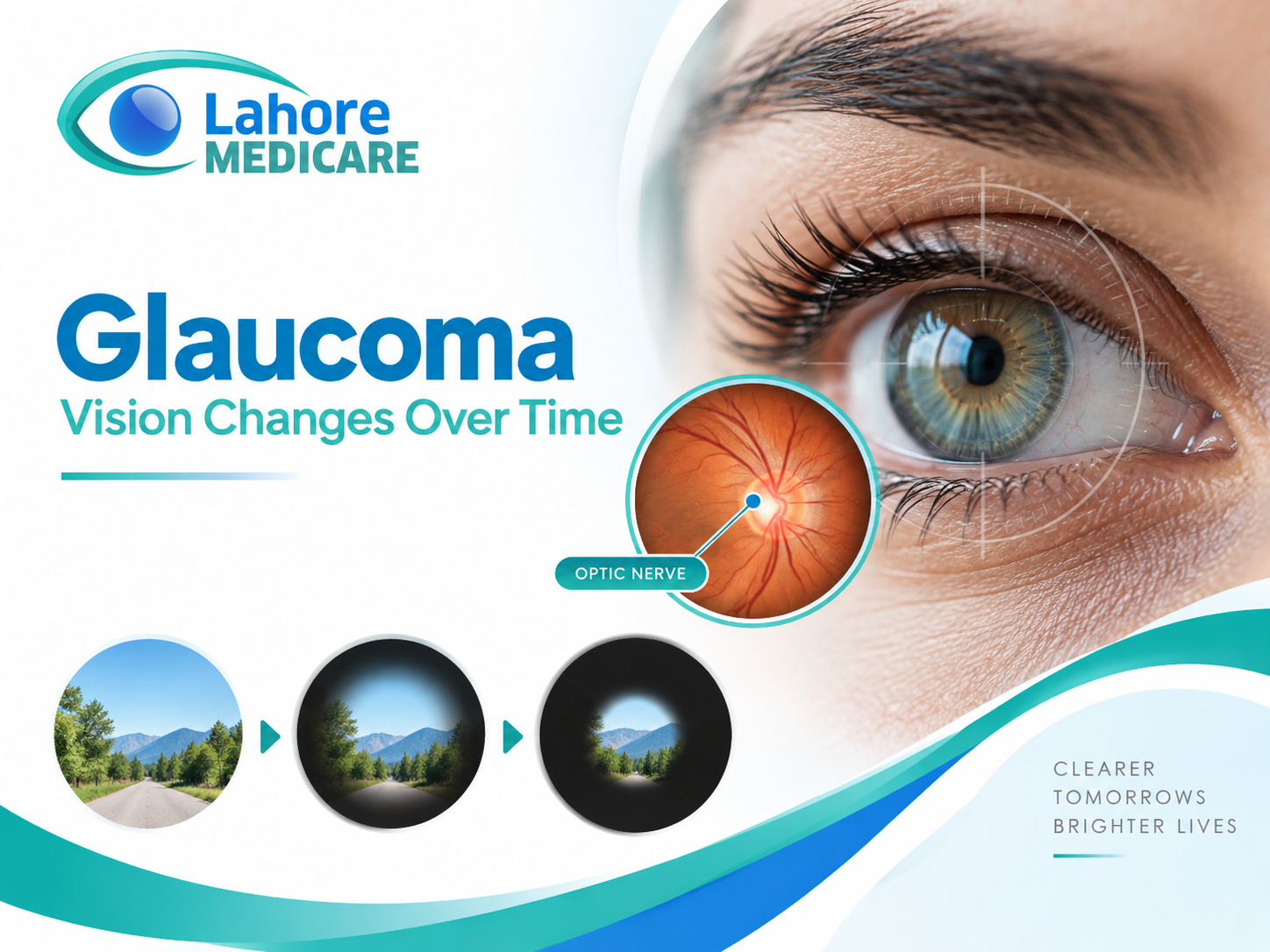
Vision loss from glaucoma happens in a distinct pattern over time. Because the optic nerve fibers carrying side vision are usually damaged first, patients lose peripheral sight long before their central vision is affected.
In the early stages, you may look straight ahead and see clearly, completely unaware that the edges of your field of view are fading. As the condition advances into moderate stages, blank spots develop in your side vision. Without timely intervention, these blank areas expand inward, leaving only a narrow window of central sight known as tunnel vision, and eventually leading to complete blindness.
Key Factors That Increase Your Risk
While the exact reasons why fluid channels become blocked are not fully understood, doctors have identified several key factors that raise your risk of developing the condition:
- Age: Although glaucoma can affect people of all ages, it becomes significantly more common in older adults.
- Family History: Having parents or siblings with glaucoma increases your likelihood of developing it.
- Racial Background: People of African, Asian, or Hispanic heritage face a higher statistical risk of early or severe eye pressure buildup.
- Medical Conditions: Living with long-term health issues like diabetes or high blood pressure can impair eye blood flow and weaken the optic nerve.
- Short-Sightedness (Myopia): Being nearsighted alters the structural shape of your eye, making the optic nerve more vulnerable to fluid pressure changes.
- Different Types of Glaucoma Require Different Care
There are different types of glaucoma, and the exact treatment plan will depend on the specific type a patient has.
Primary open-angle glaucoma is the most common form, developing slowly over years as drainage canals gradually clog. Angle-closure glaucoma happens when the drainage angle suddenly closes off, causing a fast, painful spike in eye pressure that requires immediate emergency care. Other variations, such as normal-tension glaucoma, happen even when internal pressure reads within standard ranges. Getting an accurate evaluation for Glaucoma Treatment in lahore helps identify which form you have so specialists can create a targeted management plan.
Can Glaucoma Be Cured or Reversed?
It is vital to understand that glaucoma cannot be cured, and vision that has already been lost cannot be restored. Once optic nerve fibers die, modern medicine cannot bring them back.
However, further sight loss can be prevented via medication or surgery. Prescription eye drops, oral medicines, and advanced laser therapies help reduce fluid production or widen drainage angles. Each glaucoma patient requires lifelong management for best results, meaning regular eye pressure checks and treatment adjustments are necessary for the rest of your life.
Why Early Screening and Lifelong Care Are Essential
The greatest challenge doctors face is that patients often do not seek treatment for glaucoma until it is too late to save their sight. Because early vision loss occurs in your peripheral field, you cannot rely on simple daily tasks like reading or driving to tell if your eyes are healthy.
Advanced diagnostic tools allow specialists to measure eye pressure and map optic nerve thickness long before you feel any symptoms. Exploring modern clinical Procedures of treatment For Glaucoma patients shows how early laser treatments and surgical drains can stabilize pressure and stop nerve damage in its tracks.
Comprehensive screening programs aim to make sure glaucoma is diagnosed and treated as part of local eye health services, ensuring that patients’ sight can be saved before noticeable loss occurs. Seeking an evaluation at Lahore Medicare gives patients access to thorough eye pressure checks and personalized treatment tracking.
Protecting your vision requires a dedicated team of experts who understand complex eye conditions. Consulting with the Lahore Medicare doctrs team ensures your eyes are monitored with advanced technology to preserve your sight for years to come.
Frequently Asked Questions
What is the main cause of glaucoma?
Glaucoma is primarily caused by fluid buildup inside the eye that creates pressure, damaging the optic nerve that connects your eye to the brain.
Can vision lost from glaucoma be restored?
No, vision loss caused by glaucoma is permanent and cannot be restored, but early treatment can prevent further loss of sight.
Are there early warning signs of glaucoma?
Most forms of glaucoma develop slowly without early pain or obvious symptoms, which is why regular eye checkups are essential for early detection.
Who is most at risk for developing glaucoma?
Older adults, people with a family history of glaucoma, individuals with diabetes or myopia, and people of certain racial backgrounds face higher risks.
How do doctors test for glaucoma?
Doctors test for glaucoma by measuring your internal eye pressure, inspecting your optic nerve, and checking your side vision with specialized visual field tests.
Can eye drops stop glaucoma from getting worse?
Yes, prescription eye drops lower eye pressure by reducing fluid production or improving drainage, helping prevent further damage to your optic nerve.
Is glaucoma treatment a one-time procedure?
No, glaucoma cannot be cured, so every patient requires lifelong management and routine checkups to keep eye pressure strictly controlled over time.
What is the difference between open-angle and angle-closure glaucoma?
Open-angle glaucoma develops slowly over years without pain, while angle-closure glaucoma occurs suddenly with sharp eye pain and requires emergency care.
Can stress cause high eye pressure and glaucoma?
Stress does not directly cause glaucoma, but high stress can temporarily raise blood pressure and overall eye pressure, making health management important.
How often should I get checked for glaucoma?
Adults over 40 should get a comprehensive dilated eye exam every 1 to 2 years, or more frequently if they have known risk factors.