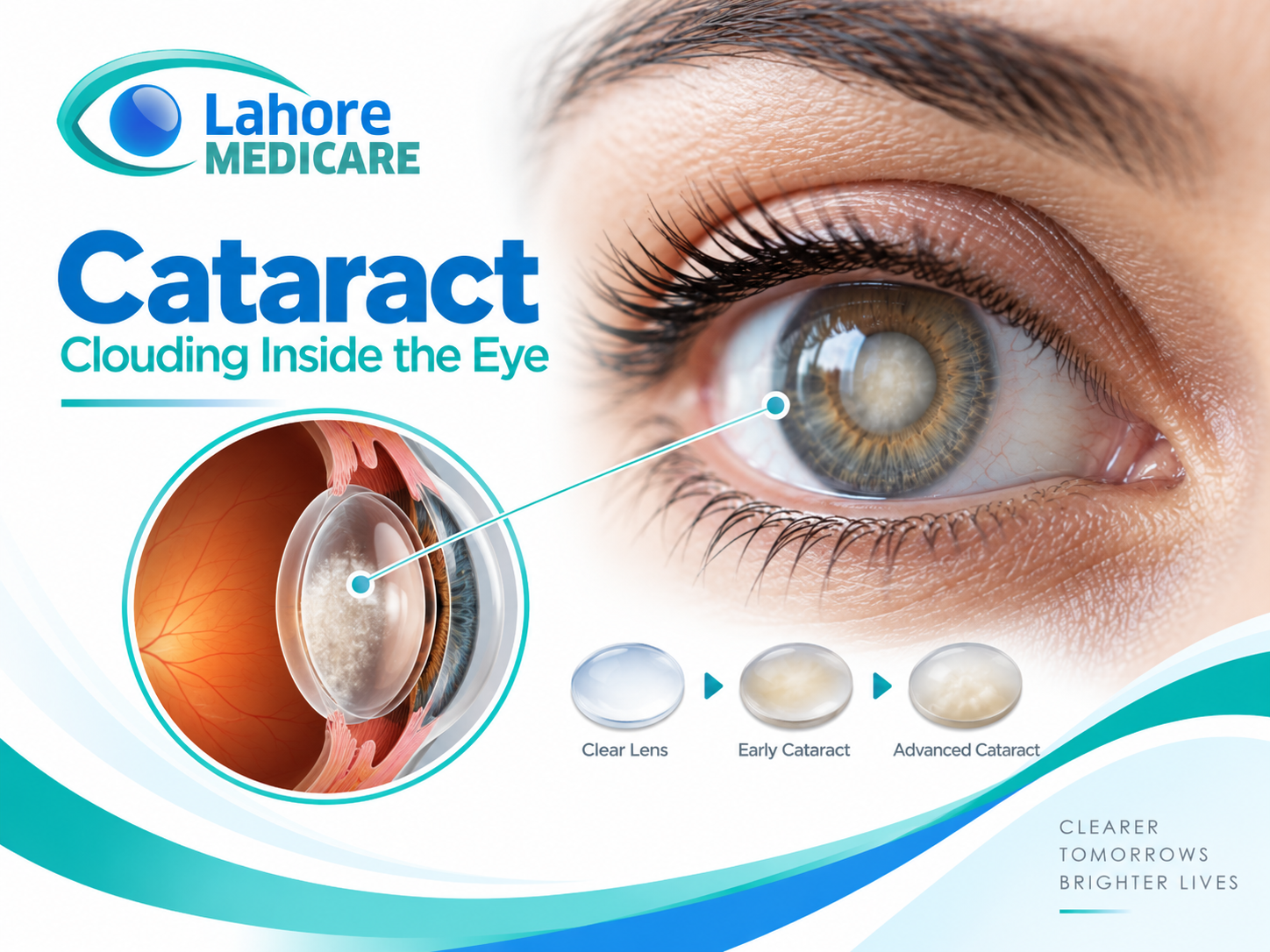
Clear vision depends heavily on the natural lens located just behind your pupil. In a healthy eye, this lens works like a camera, focusing light rays cleanly onto the retina so you can see sharp images. However, as protein structures inside the lens change over time, clear areas can begin to clump together. This gradual clouding of the lens leads directly to blurriness, making daily tasks like reading, driving, or recognizing faces increasingly difficult.
Understanding how a cataract forms inside the eye helps patients spot early vision changes and choose the right medical treatment before sight loss interferes with daily life.
The Biology of Lens Clouding Inside the Eye
The natural lens consists mostly of water and specialized proteins arranged in a precise pattern that allows light to pass straight through. As we age or experience metabolic changes, these protective proteins begin to break down and clump together.
Initially, these microscopic protein clumps create small hazy patches on the lens. Light rays passing through the clouded areas become scattered instead of focusing sharply on the retina. Over several months or years, these small opaque patches expand, reducing the amount of light reaching the back of the eye and causing a steady decline in visual clarity.
Common Root Causes of Cataract Formation
While natural aging is the most frequent reason behind protein breakdown in the lens, several other internal and environmental factors accelerate this process:
- Age: Natural cellular aging remains the leading cause of progressive lens clouding in adults over fifty.
- Eye Trauma: Physical injury to the eye can disrupt lens fibers instantly or cause delayed clouding years after the event.
- Medical Conditions: Chronic metabolic diseases like diabetes alter fluid chemistry inside the eye, speeding up lens opacity.
- Toxic Exposure and Medications: Prolonged use of steroid medications or direct exposure to toxic substances damages lens protein structures.
- Congenital Factors: In rare cases, infants are born with cataracts due to genetic conditions or intra-uterine infections during pregnancy.
- Recognizing Early Signs and Symptoms
Signs and symptoms vary depending on the specific type of cataract present, though considerable overlap occurs across different cases. Observing how your vision changes over time helps specialists pinpoint the exact nature of the lens opacity.
Common Visual Changes
– Persistent blurry or hazy sight
– Increased sensitivity to bright lights and glare
– Double vision in a single eye
– Difficulty distinguishing colors like blue or purple
– Frequent changes in glasses or contact lens prescriptions
Different types of cataracts affect sight in distinct ways. People with nuclear sclerotic or brunescent cataracts often notice a steady reduction of overall vision. Nuclear cataracts typically cause greater impairment of distance vision than of near vision, making road signs hard to read while close-up reading remains relatively clear. In contrast, those with posterior subcapsular cataracts usually complain of severe glare as their major symptom, particularly when facing oncoming headlights during night driving.
The overall severity of cataract formation, assuming no other coexisting eye disease is present, is judged primarily by a standard visual acuity test during an eye examination. Other noticeable warning signs include frequent updates to spectacle lenses and seeing colored halos around light sources caused by abnormal hydration of the lens fibers.
Exploring detailed clinical guides on cataract and lens conditions can help you evaluate whether your current visual symptoms require a comprehensive eye checkup.
How Modern Eye Surgery Restores Clear Sight
When lens clouding impairs your quality of life, surgical removal of the opaque lens is the only permanent solution. Modern medical technology has made this process fast, gentle, and highly effective.
At specialized eye care centers, treatment is performed via phacoemulsification, commonly known as phaco surgery. During this advanced procedure, the surgeon makes a tiny, self-healing incision in the eye and breaks up the clouded lens using high-frequency ultrasound waves. The fragmented lens material is then gently aspirated out of the eye.
Once the natural clouded lens is completely removed, a clear artificial intraocular lens (IOL) is put in its place to permanently restore sharp focus. Reviewing standard surgical modern cataract surgery options gives patients a clear picture of how quick recovery times are with modern ultrasound techniques.
Selecting the Right Intraocular Lens (IOL)
The overall cost of cataract treatment depends primarily on the type and brand of intraocular lens selected for implantation. Patients have access to a range of internationally certified lenses designed to match different vision goals and financial preferences.
Options include Eyecryl lenses from India for reliable standard correction, Iriflex German lenses engineered for stable visual clarity, Rayner British lenses providing high-definition contrast, and Alcon American lenses featuring premium optics for astigmatism and multifocal vision.
Consulting with experts at Lahore Medicare ensures that your eye health is thoroughly evaluated so you can select the most suitable intraocular lens for your lifestyle.
Working directly with an experienced medical team allows for precise pre-operative measurements, ensuring optimal alignment of your new lens. Getting a complete evaluation from the Lahore Medicare eye specialist team guarantees safe surgical standards and personalized care throughout your recovery journey.
Frequently Asked Questions
What is the primary cause of a cataract?
A cataract is primarily caused by aging or cellular changes that break down lens proteins, causing them to clump together and create cloudy areas on the eye lens.
Can eye drops dissolve or cure a cataract?
No, there are no proven eye drops or medications that can dissolve or cure a cataract. Surgical replacement of the lens is the only effective treatment.
How does phacoemulsification surgery work?
Phacoemulsification uses ultrasound waves delivered through a tiny incision to break the cloudy lens into microscopic pieces, which are removed before inserting a clear artificial lens.
What are the main symptoms of nuclear cataracts?
Nuclear cataracts cause progressive clouding at the center of the lens, typically leading to greater impairment of distance vision than near vision.
Is cataract surgery painful?
No, cataract surgery is performed under local numbing drops, making the entire procedure virtually painless with minimal discomfort during recovery.
What is an intraocular lens (IOL)?
An intraocular lens (IOL) is a clear artificial lens implanted inside the eye during surgery to permanently replace the clouded natural lens.
Why do cataracts cause light sensitivity and glare?
Clouded lens proteins scatter light rays entering the eye instead of focusing them cleanly, causing glare, halos around light bulbs, and bright light sensitivity.
How quickly do cataracts develop inside the eye?
Most age-related cataracts develop slowly over several years, whereas cataracts caused by diabetes or trauma can progress much more rapidly.
Can a cataract return after surgery?
No, a natural cataract cannot return once the lens is removed. However, the membrane holding the new artificial lens can occasionally become hazy and is easily cleared with a quick laser treatment.
How do doctors measure cataract severity?
Assuming no other eye disease exists, doctors judge cataract severity primarily through visual acuity testing, slit-lamp exams, and evaluating how much daily sight is impaired.