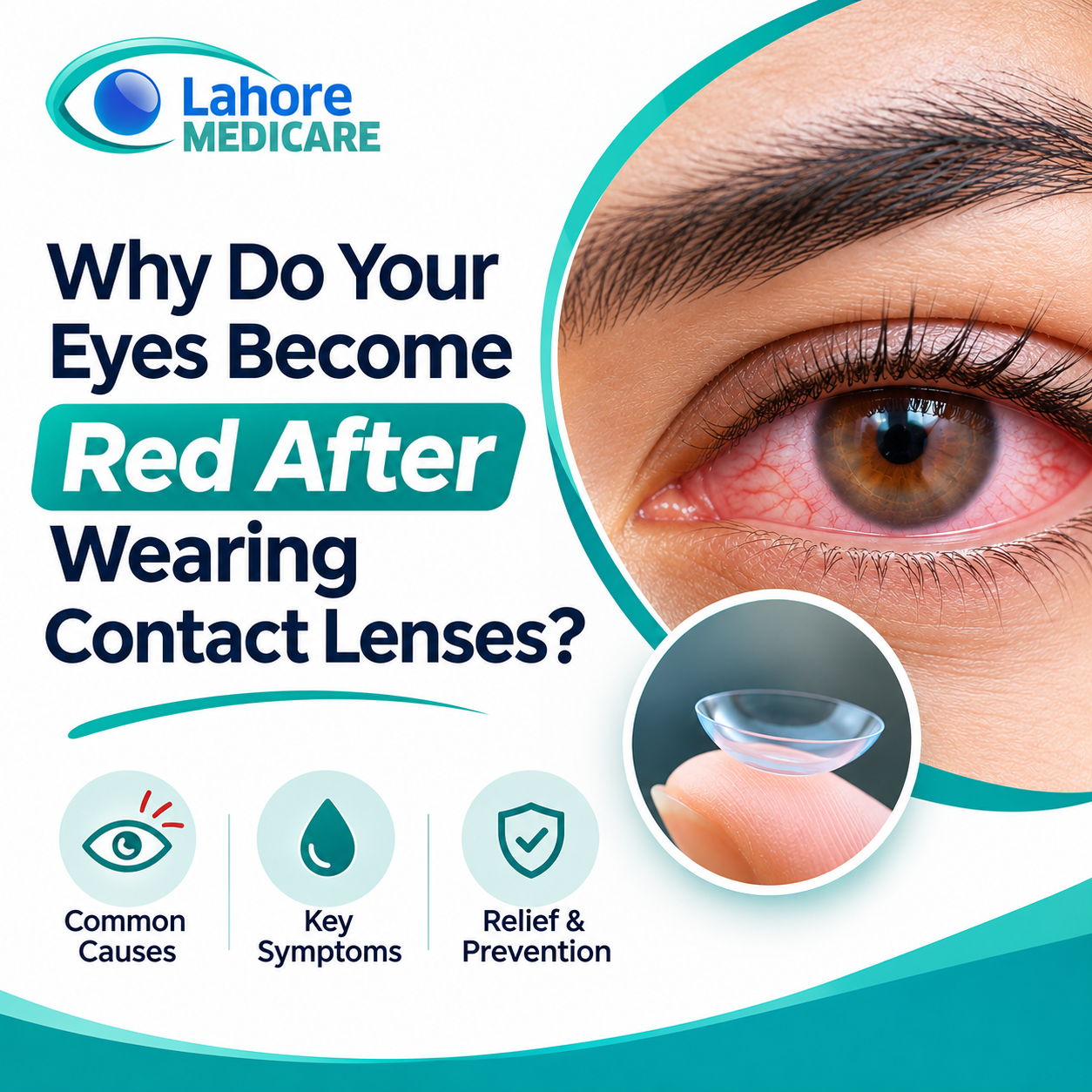
Contact lenses make everyday life easier by providing clear vision without glasses, but experiencing redness, dryness, or discomfort after wearing them can be worrying. Some people notice mild irritation after a long working day, while others experience persistent redness, burning sensations, or watery eyes even after removing their lenses.
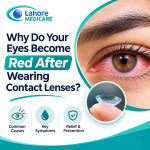
Red eyes after wearing contact lenses can develop due to several factors, including reduced oxygen supply to the cornea, dry eye syndrome, improper lens fitting, poor hygiene, and potentially serious infections. Although some cases involve temporary irritation, persistent redness should never be ignored because contact lens-related complications can sometimes threaten vision.
Understanding the difference between routine discomfort and potentially serious symptoms is essential for protecting eye health. Patients experiencing recurring lens-related problems can seek professional guidance through Lahore Medicare, where appropriate eye examinations can help identify the underlying causes of discomfort.
Understanding Eye Redness in Contact Lens Wearers
Contact lenses rest directly on the cornea, the transparent surface responsible for helping focus light entering the eye. Unlike many other body tissues, the cornea receives much of its oxygen directly from the surrounding air, making proper oxygen transmission important for maintaining its health.
When contact lenses interfere with oxygen availability, disrupt the natural tear film, or irritate the corneal surface, the eyes may respond with redness, watering, and discomfort. However, these symptoms can also indicate infection, which is why persistent irritation deserves medical attention.
Is Eye Redness After Wearing Contacts Normal?
Occasional dryness can occur during prolonged screen use, particularly when people blink less frequently or spend several hours in air-conditioned environments. Nevertheless, redness should not automatically be considered a harmless consequence of wearing lenses.
A comfortable contact lens should generally allow clear vision without persistent pain, unusual watering, or noticeable redness. If these symptoms develop, remove your lenses immediately and contact an eye care professional for advice before wearing them again.
Common Causes of Red Eyes After Lens Wear
Understanding the main contact lens eye redness causes helps explain why the same symptoms can develop through different mechanisms. While dryness and poor lens fitting may cause irritation, other conditions involve inflammation or infection requiring professional treatment.
Corneal Hypoxia: Reduced Oxygen Supply
Corneal hypoxia occurs when the cornea receives insufficient oxygen to maintain normal tissue function. Although modern contact lenses are designed to transmit oxygen, their material, thickness, fit, and wearing schedule can influence how much oxygen reaches the eye.
Prolonged oxygen deprivation may contribute to corneal swelling, irritation, and abnormal blood vessel growth. People who routinely exceed their recommended wearing time may develop complications even when their lenses initially feel comfortable.
Dry Eye Syndrome and Tear Film Problems
Contact lenses can affect the stability of the tear film, which normally lubricates and protects the eye surface. When moisture evaporates too quickly or tears become unstable, lens wearers may notice burning, fluctuating vision, redness, or a gritty sensation.
Dry environments, extended computer use, and reduced blinking can make these symptoms more noticeable. Patients experiencing ongoing dryness should receive an assessment rather than repeatedly changing eye drops without understanding the underlying cause.
For additional educational information about common eye conditions, the eye health blog provides relevant guidance on vision problems and preventive care.
Contact Lens Overwear Syndrome
Contact lens overwear syndrome refers to irritation and corneal complications associated with excessive lens use. Wearing lenses beyond their recommended schedule, sleeping in unsuitable lenses, or extending their replacement interval can increase the risk of inflammation and infection.
Some individuals experience redness only after several hours, while others develop discomfort soon after removing their lenses. Repeated episodes suggest that the wearing schedule, lens material, or overall eye health requires professional review.
Tight Lens Syndrome and Improper Fitting
A poorly fitted contact lens may restrict normal lens movement, interfere with tear exchange, or create excessive friction against the eye surface. A lens that fits too tightly can initially feel comfortable but produce redness and irritation as wearing time increases.
Professional contact lens fitting is therefore important, even for people who have worn lenses successfully for years. Changes in eye health, prescription requirements, or lens design may affect long-term comfort.
Eye Infection From Contact Lenses
One of the most serious explanations for contact lens-related redness is microbial keratitis, an infection involving the cornea. Bacteria, fungi, and organisms such as Acanthamoeba can cause infections, particularly when lenses are exposed to contaminated water or improperly maintained.
Bacterial keratitis may produce pain, excessive tearing, light sensitivity, blurred vision, and noticeable redness. Because serious infections can progress rapidly and damage the cornea, suspected cases require urgent ophthalmic assessment rather than home treatment.
Hygiene and Solution Mistakes That Lead to Eye Irritation
Contact lens hygiene plays an important role in reducing avoidable irritation and infection risks. Even high-quality lenses can become unsafe when users handle them with unwashed hands, reuse contaminated solutions, or neglect cleaning instructions.
Reusing Contact Lens Solution
Some users add fresh disinfecting solution to the liquid already inside their lens case, assuming this provides adequate cleaning. This practice, known as topping off, can compromise effective disinfection and allow microorganisms to remain on the lenses.
Reusable lenses should be cleaned and disinfected using fresh, compatible solution according to the manufacturer’s instructions and professional advice. Expired products should never be used.
Washing Contact Lenses With Tap Water
Tap water is not sterile and may contain microorganisms capable of causing serious eye infections. Contact lenses should never be rinsed or stored in tap water, bottled water, or homemade saline solutions.
Water exposure during swimming, showering, or using hot tubs can also increase infection risks. Removing lenses before these activities helps reduce unnecessary exposure.
Ignoring Lens Case Hygiene
Lens storage cases can accumulate deposits and microorganisms when they are not cleaned properly. Cases should be maintained according to professional instructions, allowed to air-dry appropriately, and replaced regularly.
Poor hygiene can also contribute to repeated irritation, making consistent cleaning habits particularly important for people who wear reusable lenses every day.
What to Do Immediately When Your Eyes Turn Red
When unusual redness develops during contact lens wear, immediate action can help reduce further irritation and prevent potentially serious complications. The priority is to stop wearing the lenses and obtain appropriate medical guidance rather than attempting to conceal the redness.
Step-by-Step Contact Lens Irritation Relief
- Remove your contact lenses immediately using clean, dry hands, and avoid reinserting them until an eye care professional confirms it is safe.
- Switch to prescription glasses so your eyes are not exposed to additional lens-related irritation.
- Avoid rubbing your eyes, as rubbing can aggravate surface irritation or an existing corneal injury.
- Do not use leftover eye medication, especially antibiotic or steroid-containing drops, without professional advice.
- Keep the lenses and storage case available for the examining clinician, who may need to assess possible contamination.
A clean, cool compress may provide temporary comfort in some cases, but it does not treat corneal infections. Similarly, lubricating drops may help diagnosed dryness when recommended by an eye care professional, but they should not delay medical assessment.
If discomfort continues after lens removal, prompt examination is necessary because early infection symptoms can resemble ordinary dryness.
Red Flags: When Eye Redness Requires Urgent Medical Attention
Although many cases of contact lens discomfort are manageable, certain symptoms may indicate corneal infection, injury, or another condition requiring urgent treatment. Contact lens-related redness deserves particular caution because serious complications cannot be reliably identified through appearance alone.
Warning Signs You Should Never Ignore
Seek urgent medical evaluation if you experience:
- Moderate or severe eye pain, especially if it continues after removing the lenses.
- Blurred or reduced vision that does not clear normally.
- Increased sensitivity to light or difficulty keeping the eye open.
- Excessive watering, unusual discharge, or rapidly worsening redness.
- A visible white or cloudy spot on the cornea.
- Significant swelling or a persistent sensation of something being stuck in the eye.
These symptoms may indicate microbial keratitis or corneal damage, and delaying treatment can increase the risk of lasting visual problems.
When Should You Visit an Eye Specialist?
An eye examination is important whenever redness returns repeatedly, lens discomfort becomes increasingly frequent, or symptoms do not improve after removing the lenses.
Patients searching for an eye doctor in Lahore can consult an eye specialist to assess corneal health, tear film stability, lens fitting, and possible infections. An ophthalmologist can determine whether medication, a different lens type, or temporary discontinuation of contact lenses is appropriate.
Consistent lens hygiene, appropriate replacement schedules, and professional fitting are essential for reducing irritation and protecting long-term eye health. However, even individuals who follow careful cleaning routines can experience complications, making early recognition of unusual symptoms equally important.
If you experience persistent redness, recurrent discomfort, or changes in vision, professional assessment can help determine whether dryness, lens fitting, inflammation, or infection is responsible. Patients can book an eye exam to discuss their symptoms and receive individualized advice about safe contact lens use.
Frequently Asked Questions
Why do my eyes become red after wearing contact lenses?
Contact lens-related redness may develop from dryness, reduced oxygen availability, poor lens fitting, overwear, or infection. Because serious complications can initially resemble mild irritation, remove your lenses and seek professional advice.
Can wearing contact lenses for too long damage my eyes?
Yes. Excessive contact lens wear can contribute to corneal swelling, irritation, and increased infection risk. Following your prescribed wearing schedule and removing lenses when discomfort develops helps protect the eye surface.
Is redness after removing contact lenses dangerous?
Redness may result from temporary irritation, but it can also signal corneal inflammation or infection. Persistent redness, pain, blurred vision, or light sensitivity requires prompt medical evaluation because serious conditions can progress quickly.
What is contact lens overwear syndrome?
Contact lens overwear describes irritation and corneal complications associated with excessive wearing time. Symptoms may include redness, discomfort, and fluctuating vision, particularly when lenses are worn beyond recommended schedules.
Can dry eyes cause contact lens irritation?
Yes. Contact lenses can disrupt the tear film, particularly during prolonged screen use or exposure to dry environments. Persistent dryness may cause burning, redness, and blurred vision, making professional assessment important.
Can dirty contact lenses cause an eye infection?
Yes. Improper cleaning, contaminated storage cases, and reused disinfecting solutions can increase microbial exposure. Some infections affect the cornea and may threaten eyesight, making correct lens hygiene and timely treatment essential.
Can I use eye drops for contact lens irritation relief?
Some lubricating drops may help diagnosed dryness, but not every product is suitable for contact lens wearers. Avoid using leftover antibiotics, steroids, or redness-relief drops without medical advice, especially when infection is possible.
Should I wear contact lenses again after redness disappears?
Do not immediately resume lens wear simply because redness has improved. Contact an eye care professional for guidance, especially if symptoms were unusual or recurrent, because an underlying infection or corneal problem may still be present.
Can sleeping in contact lenses cause red eyes?
Yes. Sleeping in contact lenses increases the risk of corneal complications and infection, even when certain lenses are approved for extended wear. Overnight use should occur only when specifically prescribed by your eye care professional.
When should I see an ophthalmologist for red eyes?
Seek urgent care for pain, light sensitivity, blurred vision, significant discharge, or worsening redness. Recurrent symptoms also require examination because they may indicate poor lens fitting, dry eye disease, or corneal inflammation.