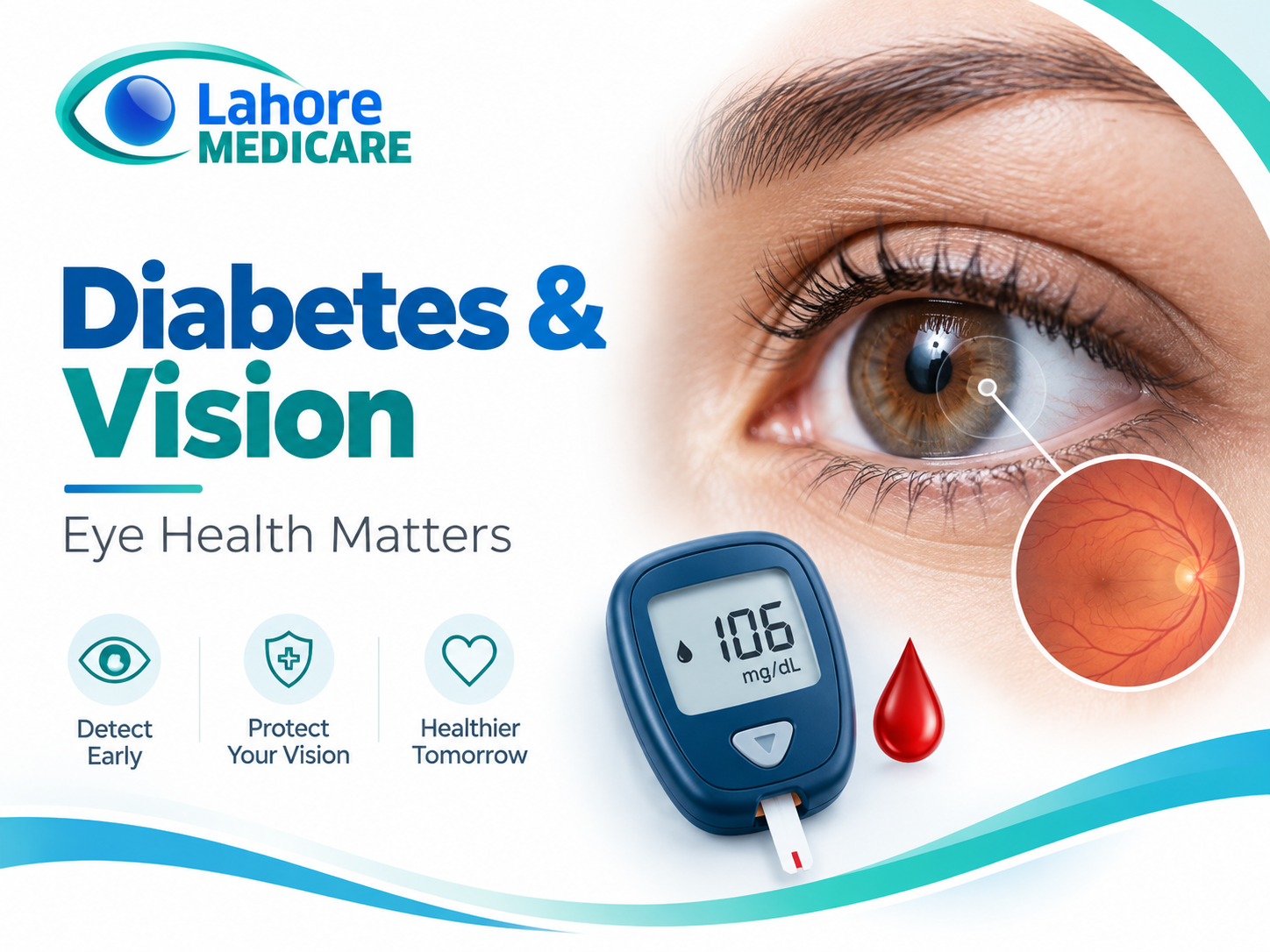
Living with diabetes requires careful daily management, from monitoring blood sugar levels to watching what you eat. However, many people do not realize that high blood sugar can also directly harm their eyesight over time.
Diabetes affects the tiny blood vessels throughout your body, especially the delicate blood vessels inside your eyes. In the early stages, diabetic eye changes often happen silently without causing any immediate pain or noticeable vision loss.
Understanding how diabetes impacts your sight helps you catch early warning signs and protect your vision for the long term.
4 Common Eye Conditions Caused by Diabetes
When blood sugar levels stay high over long periods, it damages the delicate structures inside the eye. Here are the main eye diseases linked to diabetes:
1. Diabetic Retinopathy (Retinal Diseases)
Diabetic retinopathy is the most common eye disease caused by diabetes. High blood sugar weakens and damages the tiny blood vessels in your retina the light-sensitive layer at the back of your eye.
Over time, these weak blood vessels can swell, leak blood or fluid, or close off entirely. In advanced stages, abnormal new blood vessels grow on the retina, leading to sudden vision loss or scarring. Understanding different retinal diseases and conditions can help patients recognize when their retinas need urgent medical attention.
2. Early Cataracts
A cataract causes the natural clear lens inside your eye to become cloudy, leading to blurry or dim vision. While cataracts usually develop with old age, people living with diabetes often develop cataracts much earlier in life, and the clouding tends to progress much faster.
3. Diabetic Glaucoma
Glaucoma is a serious condition where pressure inside the eye damages the optic nerve. Diabetes doubles your risk of developing glaucoma. In severe cases, abnormal blood vessels grow on the iris, blocking normal fluid drainage and causing a sudden, painful rise in eye pressure known as neovascular glaucoma.
4. Temporary Refractive Errors and Blurry Sight
Fluctuating blood sugar levels can cause the lens inside your eye to swell and change shape. This change alters how light focuses on your retina, leading to temporary refractive errors like sudden nearsightedness or overall blurry vision that changes from day to day.
Early Warning Signs to Watch Out For
In the early stages, diabetic eye conditions may not produce obvious symptoms. However, as the damage progresses, you may notice:
- Blurry, hazy, or double vision
- Frequently changing spectacle prescriptions
- Dark spots, floaters, or cobweb-like lines in your view
- Poor night vision or seeing halos around lights
- Blank areas or patches in your side vision
If left untreated, severe damage can lead to permanent low vision or complete blindness.
How to Protect Your Sight When You Have Diabetes
The good news is that most vision loss from diabetes can be prevented with simple, consistent care.
Keep Blood Sugar, Pressure, and Cholesterol Controlled
Maintaining healthy blood sugar levels reduces damage to retinal blood vessels. Managing your blood pressure and cholesterol levels further protects small blood vessels throughout your eyes.
Schedule an Annual Dilated Eye Exam
A standard vision test for glasses is not enough to check for diabetic eye damage. A specialist must dilate your pupils using eye drops to inspect the retina, blood vessels, and optic nerve deep inside the eye. Early damage can be detected long before you feel any symptoms.
Get Early Treatment for Retinal Damage
If your doctor detects leaking blood vessels or retinal swelling during an exam, specialized treatments like laser therapy or medication injections can seal the leaks and preserve your remaining vision. You can explore modern retinal laser treatment options to see how doctors treat advanced diabetic eye changes.
Personalized Eye Care from Experienced Specialists
Preventing diabetic eye complications requires clear guidance and ongoing medical monitoring. Having your eyes checked regularly by experienced eye doctors and medical specialists ensures that any subtle changes in your retina or eye pressure are caught and treated immediately.
Having your eyes checked regularly by medical specialists ensures that any subtle changes in your retina or eye pressure are caught and treated immediately. A dedicated team works closely with you to adjust treatments, monitor eye pressure, and safeguard your long-term vision.
If you or a family member has diabetes, visiting a specialist eye hospital in lahore for a complete comprehensive checkup is the best step you can take to safeguard your vision.
Frequently Asked QuestionsCan diabetic eye damage be reversed?
Damage already done to retinal tissues cannot always be completely reversed, but early medical treatment can stop further damage and prevent permanent vision loss.
How often should a diabetic person get an eye exam?
Anyone diagnosed with diabetes should get a comprehensive dilated eye exam at least once every year, or more frequently if recommended by an eye doctor.
Can fluctuating blood sugar cause temporary blurry vision?
Yes. Rapid changes in blood sugar cause the eye lens to swell or shrink, leading to sudden blurry vision that usually improves once blood sugar stabilizes.
What is the difference between diabetic retinopathy and cataracts?
Diabetic retinopathy affects the blood vessels in the retina at the back of the eye, while cataracts cause cloudiness in the lens at the front of the eye.
Is laser treatment painful for diabetic retinopathy?
Retinal laser treatments are generally painless or cause only mild discomfort. Local numbing drops are applied to keep you comfortable during the procedure.
Can controlling diabetes stop diabetic retinopathy from getting worse?
Yes, strictly controlling blood sugar, blood pressure, and cholesterol significantly slows down the progression of diabetic eye diseases.
Does Type 1 or Type 2 diabetes cause more eye damage?
Both Type 1 and Type 2 diabetes can cause severe eye damage if blood sugar levels remain uncontrolled over several years.
What happens during a dilated eye exam for diabetes?
The doctor uses drops to widen your pupils, allowing them to look directly at the back of your eye with bright light and specialized lenses to inspect the retina and blood vessels.