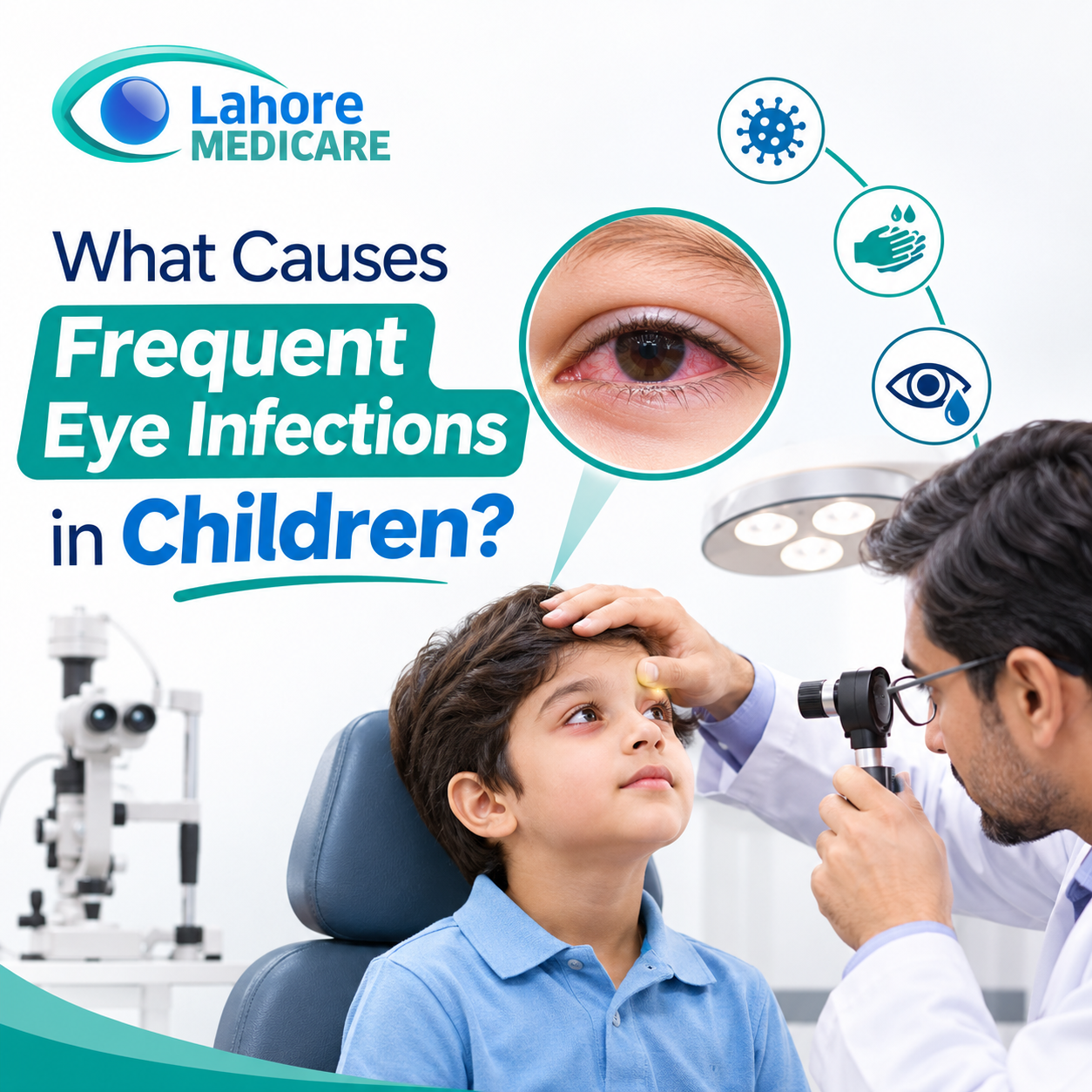
Seeing your child’s eyes become red, watery, swollen, or sticky can be worrying, especially when the same problem returns only a few weeks after the previous episode. Parents may wonder whether the infection was never fully treated, whether their child caught it again at school, or whether an underlying eye condition is responsible.
Frequent eye infections in children can have several explanations, including repeated viral or bacterial conjunctivitis, blocked tear ducts, and conditions that resemble infections, such as allergies. Because these problems can produce similar symptoms, understanding the underlying cause is essential before choosing treatment.
For parents seeking reliable eye health information, Lahore Medicare provides access to ophthalmology care and eye examinations. Recognizing early warning signs and following appropriate preventive measures can help families protect their children’s eye health.
Understanding Recurrent Eye Infections in Children
An eye infection develops when microorganisms, such as bacteria or viruses, affect the eye or surrounding tissues. Conjunctivitis, commonly called pink eye, is one of the most familiar childhood eye conditions and causes inflammation of the conjunctiva, the thin membrane covering the white of the eye and the inner eyelids.
However, repeated redness or discharge does not always indicate a new infection. Some children experience recurring irritation because of allergies, tear drainage problems, or environmental exposure.
Why Do Some Children Experience Repeated Eye Problems?
Young children frequently touch their faces, share toys, and spend time in close contact with classmates, making the transmission of contagious infections more likely.
An apparent recurrence may also represent a different condition with similar symptoms. For example, a child experiencing persistent itching during pollen season may have allergic conjunctivitis rather than repeated bacterial infections.
Parents should observe how frequently symptoms develop, whether one or both eyes are affected, and whether episodes occur alongside colds or seasonal allergies. These details help healthcare professionals identify possible causes and recommend appropriate care.
Top Causes of Frequent Eye Infections in Kids
Understanding the causes of recurrent conjunctivitis in kids requires distinguishing between infectious conditions and other problems that produce similar symptoms.
Bacterial Conjunctivitis
Bacterial conjunctivitis occurs when bacteria infect the conjunctiva, often producing redness, irritation, and sticky discharge. Children may wake up with eyelashes stuck together because discharge has accumulated overnight.
Bacterial infections can spread through contaminated hands, shared personal items, and close contact with infected individuals.
Although some mild cases improve without antibiotics, a clinician may prescribe antibiotic drops or ointment when appropriate. Repeated infections require assessment rather than automatically reusing medication from an earlier episode.
Viral Conjunctivitis
Viral conjunctivitis is commonly associated with viruses responsible for respiratory infections, including adenoviruses. A child may develop watery eyes, redness, and irritation alongside a runny nose, sore throat, or other cold symptoms.
Because viral conjunctivitis is contagious, transmission can occur through contaminated hands, shared towels, and frequently touched surfaces.
Antibiotics do not treat viral infections, and many uncomplicated cases improve with supportive care. However, persistent symptoms, significant discomfort, or vision changes require professional evaluation.
Allergic Conjunctivitis
Allergic conjunctivitis is not an infection, although parents sometimes mistake it for recurring pink eye because the symptoms can look similar.
Children with allergies often experience itching, watery eyes, and redness in both eyes, particularly after exposure to pollen, dust mites, mold, or animal dander. Unlike bacterial or viral conjunctivitis, allergic conjunctivitis cannot spread between children.
Parents can find additional background information about allergies and other eye conditions, but persistent symptoms should be assessed to determine whether allergy treatment or another approach is appropriate.
Blocked Tear Ducts in Infants
Blocked tear ducts in infants can cause continuous watering, crusting, and occasional discharge because tears cannot drain normally into the nose.
These symptoms may resemble an infection even when the white of the eye is not particularly red.
Most congenital tear duct blockages resolve naturally during the first year, although persistent obstruction or repeated discharge may require assessment by an eye specialist.
A painful, red swelling near the inner corner of the eye can indicate an infected tear sac and should receive urgent medical attention.
Risk Factors: School Settings, Hand-to-Eye Contact, and Hygiene Habits
Schools, daycare centers, and playgrounds create frequent opportunities for children to share objects and come into close contact with one another.
When a child touches a contaminated surface and then rubs their eyes, infectious organisms may reach the conjunctiva.
Why School Environments Increase Exposure
Shared toys, classroom materials, sports equipment, and towels can contribute to transmission when appropriate hygiene practices are not followed.
Respiratory infections may also spread through close contact, increasing the likelihood of viral conjunctivitis among children.
However, frequent infections should not automatically be blamed on poor hygiene, because exposure, allergies, and underlying eye conditions can also contribute.
Everyday Habits That Increase Risk
Children may rub irritated eyes without washing their hands, particularly after playing outdoors or touching shared objects.
Using another person’s towel, repeatedly handling the eyelids, and returning to shared activities while experiencing contagious symptoms can increase transmission risks.
Teaching simple handwashing routines and encouraging children to avoid rubbing their eyes are practical steps toward pediatric eye infection prevention.
Symptoms Parents Should Never Ignore: When to See a Specialist
The pink eye symptoms in children may include redness, watery discharge, itching, swollen eyelids, and crusting around the eyelashes.
Although mild conjunctivitis often improves, parents should recognize symptoms that may indicate a more serious eye problem.
Warning Signs That Require Medical Attention
Seek urgent medical assessment if your child develops:
- Moderate or severe eye pain, or marked sensitivity to light.
- Blurred vision that does not clear after removing discharge.
- Significant eyelid swelling, especially with fever.
- Severe redness, rapidly worsening symptoms, or difficulty opening the eye.
- Redness or swelling around the inner corner of the eye.
- Eye redness or discharge in a newborn.
Painful swelling around the eye, especially when accompanied by fever, restricted eye movement, or protrusion of the eye, requires emergency evaluation because infections involving deeper tissues can threaten vision.
When Recurrent Symptoms Need an Eye Examination
Repeated episodes should also be evaluated when symptoms persist despite appropriate treatment, affect the same eye repeatedly, or interfere with normal activities.
A clinician may examine the eyelids, conjunctiva, cornea, and tear drainage system to identify possible underlying problems.
Parents searching for a pediatric ophthalmologist in Lahore can consult an eye specialist and confirm the availability of age-appropriate pediatric assessment before arranging a visit.
Early diagnosis helps prevent unnecessary medication and ensures that more serious conditions are not overlooked.
Preventive Measures and Daily Eye Care Hygiene Rules for Children
Effective pediatric eye care guidance focuses on reducing infectious exposure while helping children develop simple habits that protect their eyes.
Although no routine can prevent every episode of conjunctivitis, consistent hygiene practices can lower the risk of transmission.
Daily Hygiene Practices for Children
Parents and caregivers should encourage the following habits:
- Wash hands with soap and water for at least 20 seconds, especially after school and outdoor play.
- Avoid touching or rubbing the eyes with unwashed hands.
- Use separate towels, washcloths, and pillows when someone has an eye infection.
- Clean toys and frequently touched surfaces regularly.
- Gently remove discharge using clean hands and fresh, damp cotton or a clean cloth, without rubbing the eye.
- Avoid sharing eye drops, even among family members.
Parents should also teach children to report discomfort rather than repeatedly rubbing their eyes.
Safe Home Care and Medication Precautions
For mild irritation, a clean cool compress may provide temporary comfort, while gentle cleaning can remove discharge around the eyelids. Avoid applying honey, herbal mixtures, breast milk, homemade solutions, or leftover eye medication directly into the child’s eyes. These substances may introduce contamination or delay appropriate treatment.
Antibiotic and steroid-containing eye drops should only be used under suitable medical guidance, as treatment depends on the underlying cause.
If the child has a contagious infection, follow healthcare advice and school policies regarding attendance, particularly when symptoms include fever or the child cannot avoid close contact with others.
Consistent hygiene, careful symptom monitoring, and timely medical evaluation form the foundation of preventing repeated childhood eye problems. Parents should remember that not every red or watery eye is infectious, and identifying allergies or tear drainage disorders may be just as important as treating conjunctivitis.
When symptoms continue returning or parents remain uncertain about the cause, professional assessment can provide clarity and appropriate treatment guidance. Families in Lahore can schedule an eye consultation to discuss recurring symptoms, available specialist services, and suitable next steps for their child’s eye health.
Frequently Asked Questions
Why does my child keep getting eye infections?
Repeated symptoms may result from exposure to viral or bacterial infections, particularly in school settings. Allergies and blocked tear ducts can also resemble recurring infections, so an eye examination is helpful when problems keep returning.
Can frequent eye infections affect a child’s eyesight?
Most uncomplicated conjunctivitis cases resolve without lasting vision problems. However, serious infections involving the cornea or surrounding tissues can threaten eyesight, making persistent pain, light sensitivity, or vision changes important warning signs.
Is pink eye contagious to adults?
Viral and bacterial conjunctivitis can spread from children to adults through close contact, contaminated hands, and shared personal items. Allergic conjunctivitis is not contagious, so determining the cause helps families take appropriate precautions.
How can I prevent my child from getting repeated eye infections?
Encourage regular handwashing, discourage eye rubbing, and avoid sharing towels or eye drops. Clean frequently touched objects and follow school hygiene practices, while seeking medical advice if symptoms recur despite preventive measures.
Can allergies cause recurring eye redness in children?
Yes. Pollen, dust mites, mold, and animal dander can trigger allergic conjunctivitis, causing itching, watering, and redness. Because allergies are not infections, treatment focuses on identifying triggers and managing the allergic response.
Are blocked tear ducts dangerous for babies?
Most blocked tear ducts in infants improve naturally, but persistent discharge needs medical assessment. Painful swelling near the inner eye corner can indicate infection, while redness or discharge in a newborn requires prompt professional evaluation.
Should I use antibiotic drops for every eye infection?
No. Antibiotics do not treat viral conjunctivitis or eye allergies, and some mild bacterial cases improve without them. A healthcare professional should determine whether antibiotics are appropriate rather than reusing leftover prescriptions.
Can home remedies cure eye infections in children?
Gentle cleaning and clean compresses may provide comfort but do not treat every underlying cause. Avoid placing honey, breast milk, herbal mixtures, or homemade solutions in the eyes because contamination and delayed treatment can cause harm.
When should I take my child to an eye specialist?
Seek urgent care for significant pain, light sensitivity, vision changes, severe swelling, or fever with worsening eye symptoms. Repeated infections, persistent discharge, and symptoms that do not improve also warrant an eye examination.
Can my child attend school with conjunctivitis?
School attendance depends on the cause, symptoms, and local policies. Children who are unwell or cannot avoid close contact may need to stay home. Follow medical and school guidance rather than assuming antibiotics are always required for return.