Persistent eye redness accompanied by a deep, aching pain is often mistaken for minor irritations such as conjunctivitis or fatigue. However, these symptoms can indicate a far more serious intraocular condition known as uveitis. Uveitis refers to inflammation of the uvea—the middle vascular layer of the eye wall that supplies vital oxygen and nutrients to the ocular structures.
Unlike superficial surface infections, uveitis targets deep internal tissues and can progress rapidly. Without prompt medical evaluation, severe intraocular inflammation risks damaging essential optical components and causing permanent vision loss.
Anatomy of the Uvea and Types of Uveitis
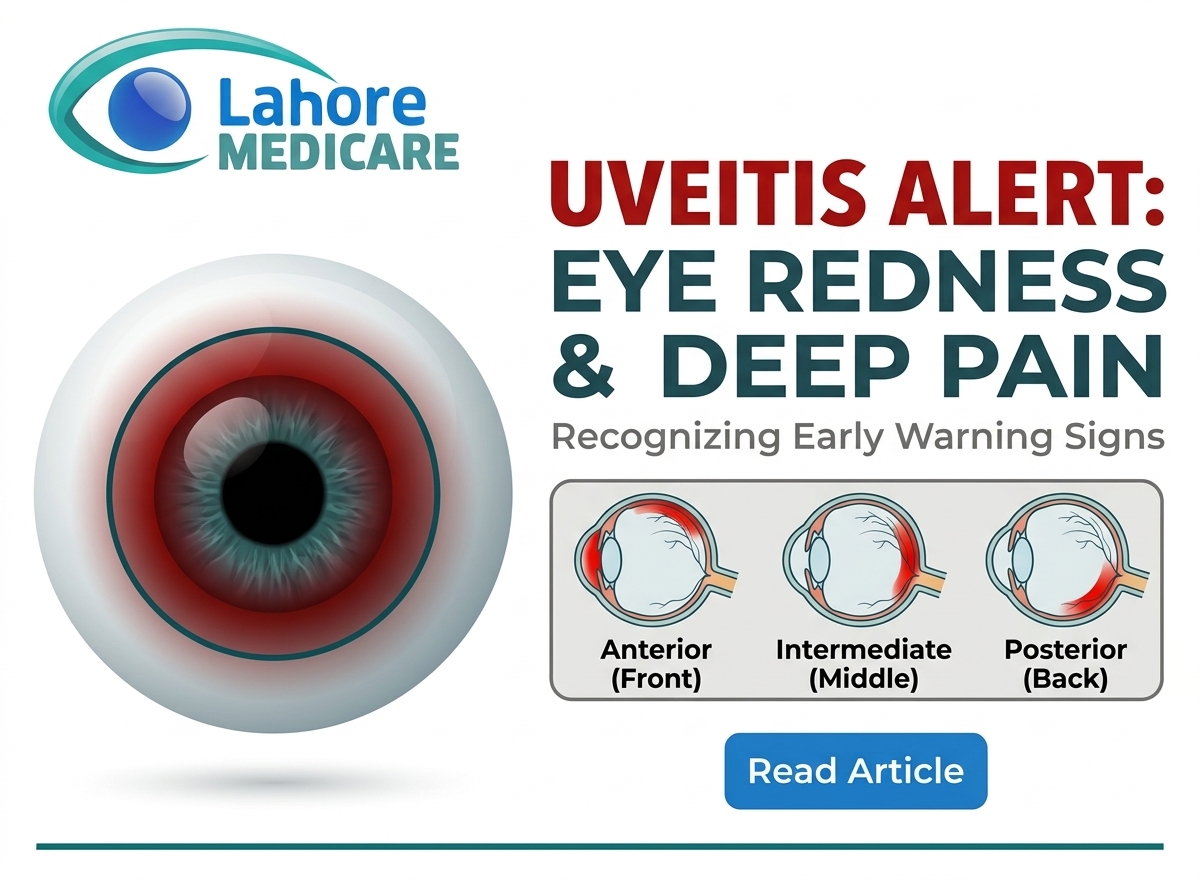
The uvea consists of three interconnected structures: the iris (the colored part of the eye), the ciliary body (which produces intraocular fluid and controls lens focus), and the choroid (the vascular layer behind the retina). Ophthalmologists classify uveitis based on which anatomical section suffers primary inflammation:
- Anterior Uveitis: The most common form, affecting the front of the eye (iris and ciliary body). It is often referred to as iritis and typically manifests with sudden pain and light sensitivity.
- Intermediate Uveitis: Affects the vitreous gel and par plana area just behind the lens. It frequently presents with floating spots and blurred vision.
- Posterior Uveitis: Targets the back of the eye, specifically the choroid and retina (choroiditis or retinitis). This form causes severe visual distortion and requires intensive medical management.
- Panuveitis: Occurs when inflammation spreads across all three layers of the uveal tract simultaneously, posing significant structural risks to the eyeball.
Recognizing Early Warning Signs
The onset of uveitis can be sudden and dramatic or slow and progressive. Identifying early visual disruptions is critical for seeking timely care:
- Deep, Aching Eye Pain: A persistent, dull ache within or around the orbit that worsens when focusing or moving the eyes.
- Marked Eye Redness: Diffuse redness concentrated near the iris rather than simple surface blood vessel enlargement.
- Severe Light Sensitivity (Photophobia): Discomfort or pain triggered by normal indoor lighting or daylight.
- Blurred or Decreased Vision: Loss of sharpness resulting from inflammatory cells floating in the anterior chamber or vitreous humor.
- Sudden Floaters: Dark streaks, spots, or web-like shapes moving across the visual field due to vitreous inflammation.
Experiencing persistent eye discomfort combined with visual changes necessitates an emergency evaluation at a specialized center like Lahore Medicare to prevent internal scarring and optic nerve complications.
Root Causes and Risk Factors
Uveitis primarily affects adults between 20 and 50 years of age, though children can also develop the condition. The underlying triggers fall into three primary categories:
- Autoimmune and Inflammatory Disorders: The body’s immune system mistakenly attacks healthy intraocular tissue. Associated conditions include ankylosing spondylitis, rheumatoid arthritis, sarcoidosis, lupus, and inflammatory bowel disease.
- Infections: Viral, bacterial, or fungal infections—such as herpes simplex, shingles, tuberculosis, toxoplasmosis, or syphilis—can cross systemic barriers to trigger uveal inflammation.
- Ocular Trauma or Surgery: Physical injury to the eyeball, chemical exposure, or previous invasive eye surgery can incite a localized inflammatory response.
In many cases, an exact cause cannot be isolated despite comprehensive systemic testing; this is referred to as idiopathic uveitis.
Diagnostic Assessment and Modern Treatments
Diagnosing uveitis requires a thorough examination using a slit-lamp microscope, ophthalmoscopy, dilated fundus evaluation, and optical coherence tomography (OCT) to measure retinal thickness.
Treatment focuses on reducing inflammation, controlling ocular pain, and preventing complications like glaucoma, cataracts, or macular edema:
- Corticosteroid Therapy: Anti-inflammatory steroid eye drops form the primary defense for anterior uveitis. Systemic oral steroids, periocular injections, or intraocular implants are utilized for deeper intermediate or posterior inflammation.
- Mydriatic Eye Drops: Prescription dilating drops relax the ciliary muscle to relieve deep aching pain and prevent the iris from sticking to the lens (synechiae).
- Immunomodulatory Medications: For chronic or autoimmune-driven cases, immunosuppressants or biologic agents help regulate systemic immune responses without long-term steroid dependence.
- Targeted Anti-Infective Therapies: Antibiotic, antiviral, or antifungal agents are prescribed alongside anti-inflammatory care when an active infectious pathogen is identified.
Patients experiencing persistent red-eye symptoms or underlying autoimmune flare-ups can rely on specialized care for complex eye inflammation and diseases to control internal swelling. When structural complications arise, utilizing advanced ophthalmic procedures helps restore clarity and maintain visual acuity.
Frequently Asked Questions
Is uveitis considered a medical emergency?
Yes. Sudden intraocular inflammation can cause rapid spikes in eye pressure, cataracts, or retinal damage. Immediate evaluation by an ophthalmologist is essential to prevent permanent vision loss.
What is the difference between conjunctivitis (pink eye) and uveitis?
Conjunctivitis affects the clear membrane covering the white part of the eye, causing itching, discharge, and superficial redness. Uveitis affects internal vascular layers, causing deep ocular pain, severe light sensitivity, and blurry vision.
Can uveitis affect both eyes simultaneously?
Yes. Uveitis can occur in one or both eyes. Autoimmune-related uveitis frequently affects both eyes, either at the same time or sequentially over time.
What triggers a uveitis flare-up?
Flare-ups can be triggered by systemic autoimmune disease activity, active infections, high stress levels, systemic illness, or abrupt changes in immunosuppressive medications.
Can uveitis lead to secondary glaucoma or cataracts?
Yes. Prolonged intraocular inflammation or long-term steroid use can elevate intraocular pressure (causing secondary glaucoma) or cloud the natural lens (causing cataracts).
How long does a uveitis episode last?
Acute anterior uveitis typically resolves within a few weeks to a few months with proper treatment. Chronic forms of intermediate or posterior uveitis can persist for months or years, requiring long-term monitoring.
What does uveitis pain feel like?
Uveitis pain is typically described as a deep, throbbing ache inside or behind the eye, distinct from the scratching, gritty feeling of surface dry eyes or conjunctivitis.
Can stress cause uveitis?
While stress alone does not directly cause uveitis, severe emotional or physical stress can trigger systemic autoimmune activity, which may lead to an intraocular flare-up.
What is anterior uveitis vs posterior uveitis?
Anterior uveitis affects the front of the eye (iris and ciliary body) and causes acute pain and redness. Posterior uveitis affects the back of the eye (choroid and retina) and primarily affects vision with floaters and blurriness.
Are steroid eye drops safe for long-term uveitis treatment?
Steroid eye drops are highly effective but require close ophthalmic supervision, as long-term use can increase intraocular pressure and accelerate cataract formation.