When people experience changes in their sight, their first instinct is usually to check the structural health of their eyes. However, the visual pathway does not stop at the back of the eyeball. Perfect vision requires a flawless, real-time connection between the eyes and the brain. When this communication complex breaks down due to neurological issues, it falls under a specialized medical field known as neuro-ophthalmology.
Neuro-ophthalmology are vision problems that relate to the nervous system. Vision disturbances can be caused by disorders of the optic nerve, central nervous system (brain and spine), eyeball movement and pupil abnormalities. Understanding these complex connections helps patients decode mysterious visual symptoms that standard optical examinations might miss.
The Anatomy of the Optical Pathway
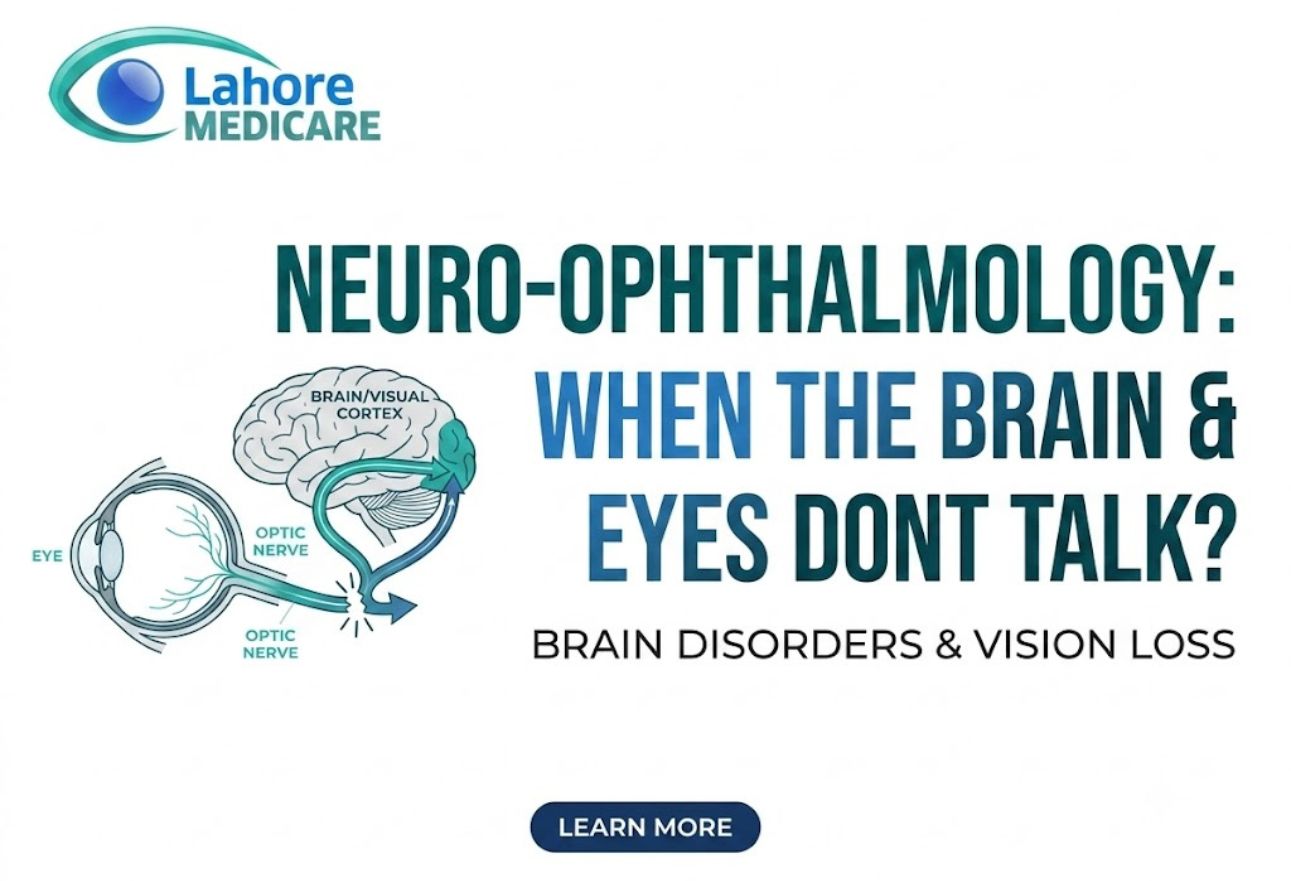
To understand how neurological conditions disrupt your sight, it helps to look at how the brain processes images. The optic nerve connects the eye to the brain and acts like an electrical cable bringing visual information from the eye to the brain for processing. If this structural cable is damaged, frayed, or compressed, the signals never reach their final destination, leading to severe vision gaps.
Because the visual pathway travels from the front of the face all the way to the occipital lobe at the very back of the brain, any disease affecting the central nervous system can alter your sight. When diagnosing complex visual tracking errors or sudden blind spots, specialists at a dedicated facility like Lahore Medicare look beyond the surface of the eye to trace the complete path of the nervous system.
Common Neuro-Ophthalmology Diseases and Disorders
Neurological vision issues generally fall into two main categories: problems with signal transmission through the nerve cable, and mechanical tracking issues that prevent the eyes from moving together smoothly.
Optic Nerve Disorders
When the primary cable transmitting visual data is compromised, the quality of your vision drops dramatically. Optic nerve disorders include:
- Compression: Physical pressure resting against the nerve tissue, which blocks the flow of biological signals.
- Not enough blood supply (ischaemia): A restriction of oxygen-rich blood reaching the nerve, causing sudden tissue stress.
- Inflammation (swelling): Immune-driven swelling that interrupts signal speed and clarity.
- Trauma (injury): Direct physical impact or head trauma that damages the delicate nerve pathways.
- Raised pressure in the brain: Excess cerebrospinal fluid pressure pushing directly against the back of the optic disc.
- Raised pressure in the eye (glaucoma): Structural pressure within the eyeball that gradually destroys vulnerable nerve fibers.
Eye Movement Disorders
Sometimes the optic nerve works perfectly, but the brain cannot coordinate the muscles that point the eyes in the same direction. This lack of alignment causes double vision, dizziness, and tracking difficulties. Eye movement disorders stem from multiple distinct anatomical breakdowns:
- Diseases of the orbit cause restricted movement by physically locking the eyeball within its socket.
- Diseases affecting the nerves to the muscles cause weakness, leaving the muscles without the electrical impulses needed to contract.
- Diseases can affect the transmission (sending) of signals between the nerve and muscle, causing misfires even if the nerve itself is healthy.
- Diseases can affect the muscle directly, making it too stiff or too weak to pull the eye smoothly.
- Diseases can affect the parts of the brain that control movement, disrupting the high-level coordination required for both eyes to track a moving object together.
Identifying the Root Causes
The causes of neuro-ophthalmology disorders depend on the type of underlying structural or metabolic shift occurring in the body. Because these issues bridge the gap between neurology and ophthalmology, the root triggers are highly diverse.
Compression may be caused by a tumour or an expanding aneurysm pressing against the visual pathways. Meanwhile, a reduced blood supply may be caused by hypertension, diabetes, hyperlipidaemia or smoking, all of which damage the microscopic blood vessels supplying the optic nerve.
Inflammation (swelling) is often related to diseases that can affect other parts of the body, like connective tissue disease and multiple sclerosis. In these instances, the body’s own immune system mistakenly attacks the protective coating around the nerves, slowing down visual processing.
Specialized Management and Care Pathways
Navigating a neurological vision disorder requires highly detailed diagnostic mapping. Because these symptoms frequently mimic standard refractive errors or basic eye fatigue, undergoing a comprehensive evaluation is the only way to uncover hidden neurological triggers.
When complex visual changes point toward a deeper systemic issue, finding targeted neuro ophthalmology treatment in lahore ensures that both the neurological root cause and the visual symptoms are managed simultaneously. Early detection is key to preventing permanent optic nerve decay.
Modern clinical diagnostic and surgical procedures make it possible to relieve pressure on the optical pathways, restore healthy blood flow, and rehabilitate weak eye muscles. Managing underlying systemic conditions like high blood pressure or inflammation early protects your long-term vision and preserves your quality of life.
Frequently Asked Questions
What exactly is a neuro-ophthalmologist?
A neuro-ophthalmologist is a specialized physician who diagnoses and treats vision problems related to the nervous system, focusing on the complex connection between the eyes, the brain, nerves, and facial muscles.
How does a brain tumor cause changes in vision?
A brain tumor can physically press against the optic nerve or visual pathways. This compression blocks the transmission of visual signals from the eye to the brain, causing blurred vision or blind spots.
Can high blood pressure lead to optic nerve damage?
Yes. High blood pressure can cause ischaemia, which means not enough blood supply reaches the delicate optic nerve. Without consistent oxygen and nutrients, the nerve cells can suffer sudden, lasting damage.
What causes sudden eye movement tracking disorders?
These disorders can stem from diseases affecting the muscles, nerve-to-muscle signal transmission, or the specific brain regions controlling movement, leaving the muscles too weak or uncoordinated to track properly.
How is multiple sclerosis linked to vision problems?
Multiple sclerosis often causes inflammation and swelling of the optic nerve. This autoimmune inflammation disrupts the speed and clarity of the signals traveling to the brain, causing temporary vision loss.
What are the primary symptoms of raised pressure in the brain?
Raised pressure inside the skull pushes against the back of the eyes, causing optic disc swelling. This often presents as brief vision blackouts when changing positions, double vision, or constant headaches.
Can smoking increase my risk for neurological vision loss?
Yes. Smoking damages blood vessels and accelerates hyperlipidaemia and hypertension. This significantly reduces the blood supply to the optic nerve, increasing the risk of ischemic optic neuropathy.
What is the difference between glaucoma and neurological nerve compression?
Glaucoma is caused by raised pressure inside the eye that damages nerve fibers over time. Neurological compression occurs outside the eye, where tumors or swelling press against the nerve path to the brain.
Can double vision be fixed if it is caused by a nerve issue?
Yes. Depending on the cause, treatment can include prisms in glasses to align the images, specialized therapies to help weak muscles, or managing the systemic disease that is blocking the nerve signals.
When should I see a specialist for a neuro-ophthalmic issue?
You should seek immediate medical evaluation if you experience unexplained, sudden vision loss, double vision, unequal pupil sizes, or visual disturbances accompanied by headaches or loss of balance.