When preparing to expand your family, the checklist of health precautions usually focuses on immediate prenatal nutrition, general physical fitness, and typical maternal evaluations. However, a deeper layer of preventative health resides directly within our DNA. Many congenital conditions that impact a child’s vision, sometimes leading to severe structural visual impairment or permanent low vision, are passed down silently through generations. Knowing your genetic compatibility before pregnancy allows couples to navigate the future with clear clinical insight.
The Reality of Silent Genetic Carriers
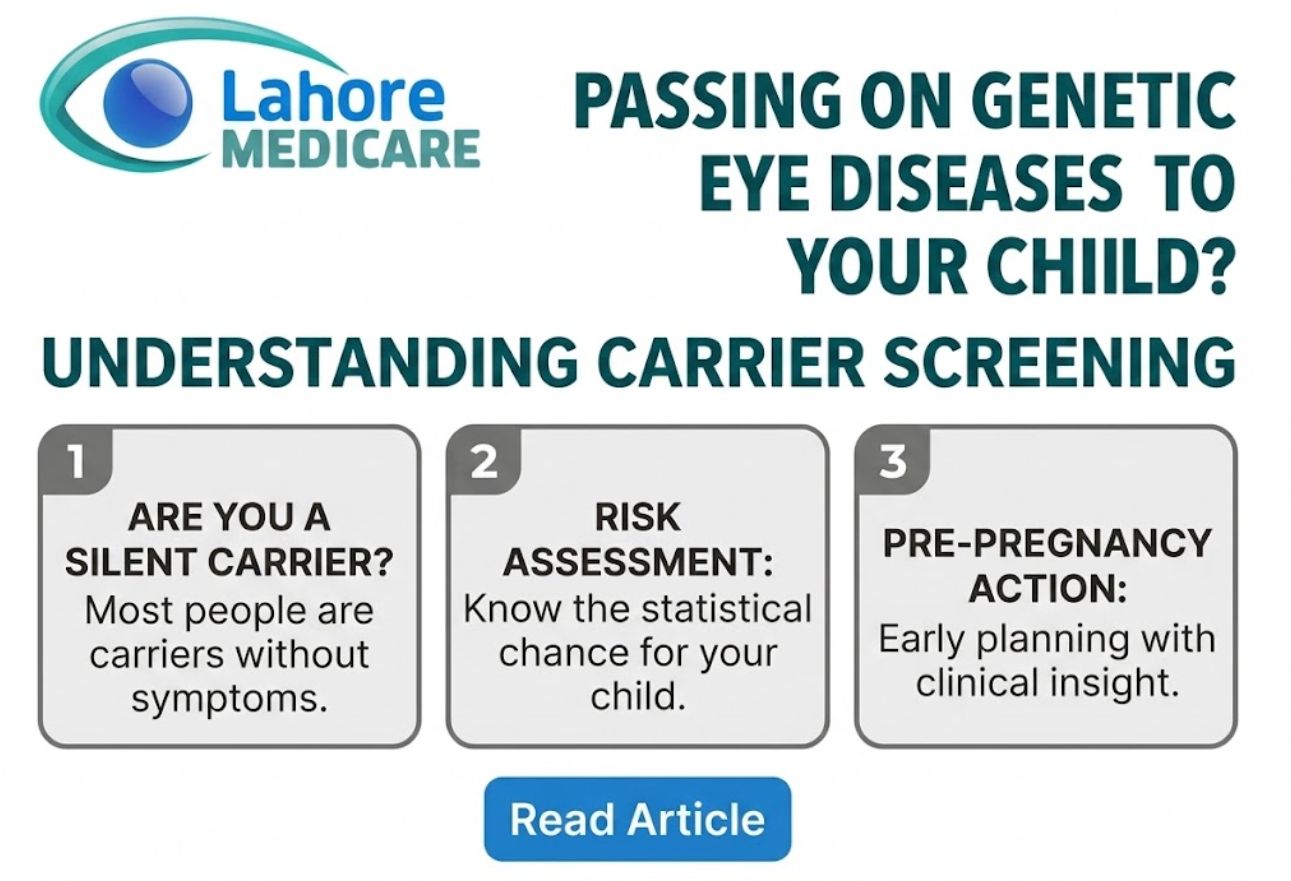
A frequent misunderstanding about hereditary health disorders is that they only manifest in families with a visible, multi-generational history of chronic illness. Modern molecular science demonstrates that inheritance patterns are rarely that obvious. It is normal to be a carrier for a handful of genetic diseases without it impacting your daily life. In fact, most individuals are carriers for genetic disease despite no history of disease within their family. Because carriers have one functional, balancing gene, they typically experience perfect physical health and excellent optical clarity throughout their lives.
What is important to know is if your partner or future spouse are carriers for the same genetic disease. When two people are carriers of the same disease, they can unknowingly have a child that is affected by a genetic condition. Learning about which genetic disease you are a carrier for before pregnancy allows you to take steps to plan for your future family. This foundational knowledge transforms proactive family planning from guesswork into a highly targeted medical safeguard.
Understanding the Rules of Genetic Inheritance
The physical transmission of a genetic trait from parents to their biological children relies entirely on the structural behavior of the affected genes. Genetic diseases differ in the way that they can be inherited. Carrier screening is performed for genetic diseases that are inherited in an Autosomal Recessive or X-linked manner. Your chance of passing on a condition to your child depends on your carrier status, the carrier status of your partner as well as the mode of inheritance for each specific disease.
Identifying these pathways allows medical experts to accurately calculate reproductive risk metrics. Early screening gives prospective parents an objective look at how traits pass down, especially concerning delicate optical tissues.
The Dynamics of Autosomal Recessive Transmission
The majority of the conditions included in Carrier Screening are inherited in an autosomal recessive pattern. This means that the disease is equally found in males and females and that it must be inherited from both parents in order for future generations to be affected. An individual that is a carrier of an autosomal recessive disease inherited one disease-causing copy of the gene and one health copy of the gene from their parents.
When two individuals are carriers for the same autosomal recessive disease, they have a 25% chance of both passing on a disease-causing copy of the gene to their child. In that specific scenario, the child inherits two mutated copies, causing the disease to express itself fully. Conversely, there is a 50% chance the child will become a healthy carrier like the parents, and a 25% chance they will inherit completely unmutated genes.
A Crucial Distinction: Every individual pregnancy carries an entirely independent 25% statistical risk. Having one child affected by an autosomal recessive disorder does not lower or alter the risk profile for subsequent pregnancies.
How X-Linked Conditions Differ
Certain hereditary traits are tied explicitly to the chromosomes that dictate biological sex, following a completely different transmission logic. X-linked conditions are inherited exclusively from mother to child and are more often seen in males than in females. X-linked disease are caused by mutations found on the X chromosome.
Because males (XY) only have one X chromosome, if they inherit a disease-causing copy of the X chromosome from their mothers, they are more greatly affected than females (XX). This is because males (XY) receive no compensation of the affected traits from another X chromosome. In order for a male to be affected by an X-linked condition, they must receive only one disease-causing copy. If the female partner is a carrier of an X-linked genetic disease, the couple’s chance of having an affected male child is 50%.
Clinical Steps to Protect Your Child’s Vision
Because genetic mutations are completely invisible to the naked eye, regular physical checkups cannot uncover your carrier status. Comprehensive molecular screening is the only definitive method to identify hidden trait variations before they impact subsequent generations. This level of biological insight is especially critical when tracking congenital vision defects that manifest early in development.
For young couples in Pakistan seeking to secure their family’s future, a trusted medical institute like Lahore Medicare provides the deep clinical expertise needed to understand hereditary risks. Identifying a genetic vulnerability early gives parents a clear head start in managing potential anomalies.
When a hereditary optical condition is caught early in development, utilizing modern, advanced diagnostic procedures for eye care allows specialists to monitor structural shifts immediately. Should any genetic trait begin affecting a child’s development, receiving prompt specialized treatment for complex eye diseases helps preserve optimal visual acuity, stabilize tracking pathways, and give the child the best possible foundation for long-term optical health.
Frequently Asked Questions
What does it mean to be a silent carrier of a genetic disease?
Being a carrier means you possess one mutated copy of a gene alongside one perfectly healthy copy. The healthy gene compensates for the mutation, ensuring you live completely free of symptoms while unknowingly harboring the trait.
How do two healthy parents have a child with an autosomal recessive condition?
If both parents are healthy carriers of the exact same recessive mutation, they each hold a single altered gene. During conception, there is a 25% statistical chance that both will pass down their mutated copy to the child.
Why do X-linked genetic conditions impact biological males more severely?
Males inherit a single X chromosome from their mother. If this chromosome holds a disease-causing mutation, they have no secondary X chromosome to balance the trait, causing the physical condition to express itself fully.
Are autosomal recessive diseases distributed evenly between genders?
Yes. Autosomal recessive traits reside entirely on non-sex chromosomes. Because these chromosomes are structured identically in both males and biological females, the conditions occur with equal frequency across both genders.
What is the recurring risk for a mother carrying an X-linked gene?
A mother who carries an X-linked genetic condition faces a 50% probability during each pregnancy that a male child will inherit the mutated chromosome, resulting in the full manifestation of the genetic condition.
Can pre-pregnancy screening completely eliminate genetic risks?
Screening cannot alter your biological DNA, but it map out precise inheritance risks. This allows couples to consult with medical professionals to utilize advanced reproductive planning and early childhood interventions.
Is it common for healthy people to carry genetic mutations?
Yes. Modern clinical research indicates that almost every healthy individual safely carries a handful of recessive genetic variations, even if their family has no recorded history of developmental or physical illness.
Can an autosomal recessive mutation cause low vision in children?
Yes. Severe congenital conditions such as Leber congenital amaurosis or specific retinal dystrophies are passed down via autosomal recessive pathways, leading to structural low vision if both mutated genes are inherited.
What happens if only one parent tests positive as a carrier?
If only one parent carries an autosomal recessive gene mutation, the child faces a 0% chance of developing the physical disease. However, there is still a 50% chance the child inherits the gene and becomes a carrier.
When should a couple ideally undergo carrier screening?
The most effective time to undergo genetic carrier screening is during the preconception phase. Testing before pregnancy gives couples the maximum time to assess their options and build a comprehensive health plan.