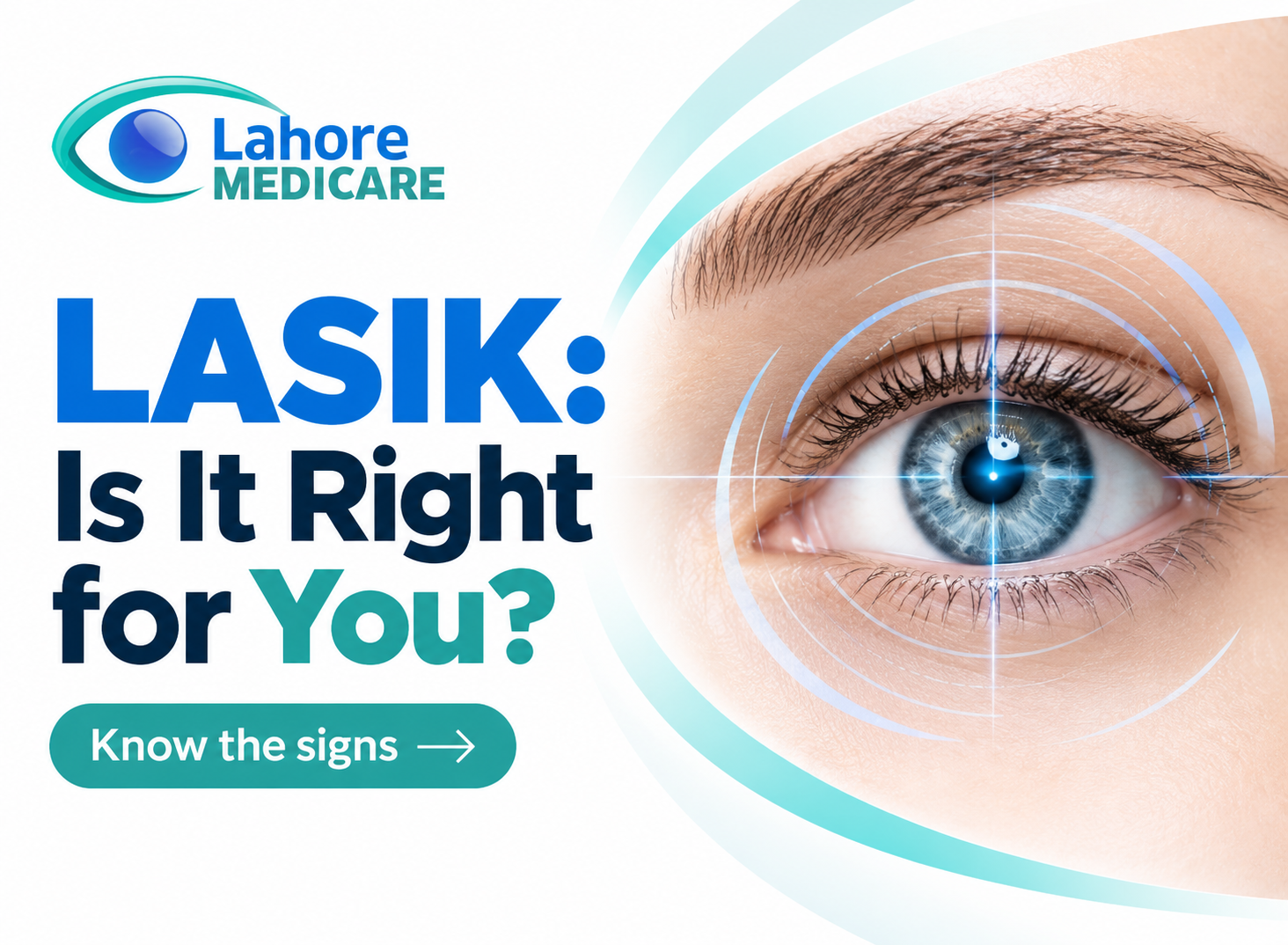
Laser-Assisted Situ Keratomileusis, commonly known as LASIK, is one of the most popular and effective refractive surgical procedures performed worldwide. Designed to correct common vision problems such as nearsightedness (myopia), farsightedness (hyperopia), and astigmatism, LASIK works by reshaping the cornea, the clear front surface of the eye. By altering corneal curvature, light rays entering the eyeball focus accurately onto the retina, providing sharp, clear vision without a heavy reliance on prescription glasses or contact lenses.
While the procedure boasts a high success rate and rapid recovery times, LASIK is not a universal solution for every individual experiencing visual impairment. Determining candidacy requires a thorough understanding of physical health requirements, corneal anatomical structures, and visual lifestyle goals.
Understanding How LASIK Works
To evaluate candidacy, it helps to understand the biomechanics of the procedure. Under normal visual conditions, a perfectly curved cornea bends (refracts) light precisely onto the retinal plane. Refractive errors occur when the shape of the eyeball or cornea prevents light from focusing correctly:
- Nearsightedness (Myopia): The eyeball is slightly too long or the cornea is overly steep, causing light rays to focus in front of the retina rather than directly on it.
- Farsightedness (Hyperopia): The eyeball is too short or the cornea is too flat, causing light to focus behind the retina.
- Astigmatism: The cornea exhibits an asymmetrical curvature (shaped like a football rather than a basketball), creating multiple focus points that cause overall visual distortion.
During LASIK surgery, a specialized femtosecond laser creates a paper-thin, hinged flap in the outer layer of the cornea (epithelium and stroma). The surgeon lifts this micro-flap to expose the underlying corneal tissue. An excimer laser then applies cool ultraviolet light pulses to remove microscopic amounts of tissue, reshaping the corneal curve to correct the specific refractive error. The flap is subsequently smoothed back into place, where it adheres naturally without the need for stitches.
Essential Criteria for Ideal LASIK Candidates
Surgical safety and long-term satisfaction depend heavily on patient pre-screening. An ideal candidate for LASIK must meet several fundamental clinical and physiological benchmarks:
1. Age and Visual Stability
Candidates should be at least 18 years old. Before early adulthood, the human eye continues to grow and change shape, which can alter vision prescriptions unpredictably. Furthermore, candidates must demonstrate a stable eyeglass or contact lens prescription for at least 12 consecutive months. Undergoing refractive surgery while an eye prescription is still actively shifting can lead to regression and suboptimal long-term visual outcomes.
2. Adequate Corneal Thickness
Because LASIK removes microscopic layers of corneal tissue to reshape its focal power, having sufficient underlying corneal thickness is essential. Creating a corneal flap and reshaping the bed requires leaving a safe, structurally sound residual corneal base (known as the residual stromal bed). Patients with naturally thin corneas may not be suitable candidates for standard LASIK due to an increased risk of post-surgical ectasia (corneal instability). In such instances, alternative surface ablation treatments like PRK (Photorefractive Keratectomy) or SMILE (Small Incision Lenticule Extraction) may be recommended.
3. Healthy Ocular Structures and Free from Active Disease
Candidates must have overall good eye health. Active ocular infections, severe chronic dry eye syndrome, uncontrollable glaucoma, advanced cataracts, keratoconus, or viral corneal scarring can compromise healing or lead to post-operative complications. A comprehensive corneal topography evaluation performed at a specialized facility like Lahore Medicare maps the exact curvature and structural integrity of the eye before surgery is considered.
4. Overall Systemic Health
Systemic autoimmune conditions such as uncontrolled rheumatoid arthritis, lupus, or Sjogren’s syndrome can impair the body’s natural wound-healing process and increase the likelihood of post-operative corneal inflammation or infection. Similarly, uncontrolled diabetes can affect vascular healing and lead to unpredictable refractive fluctuations.
5. Realistic Expectations
While LASIK significantly reduces or eliminates dependence on corrective eyewear for the vast majority of patients, achieving absolute 20/20 vision cannot be guaranteed for every eye. Additionally, LASIK corrects current distance refractive errors but does not stop the natural age-related loss of close-up reading focus (presbyopia), which typically begins around age 40 to 45.
Signs LASIK May Not Be the Right Choice
While many individuals achieve clear vision following refractive surgery, certain physical conditions or anatomical factors may make traditional LASIK unadvisable:
- Pregnancy and Breastfeeding: Hormonal fluctuations during pregnancy and nursing can alter fluid retention in the eye, temporarily changing corneal shape and refractive power. Surgery should be postponed until hormonal levels and prescriptions stabilize after weaning.
- Irregular or Extra-Thin Corneas: Conditions such as subclinical keratoconus, where the cornea thins and bulges outward into a cone shape, contraindicate LASIK because creating a flap weakens structural stability.
- Severe Dry Eye Syndrome: LASIK temporarily disrupts corneal nerves responsible for tear production signaling, which temporarily exacerbates dry eye symptoms during recovery. Patients with severe pre-existing dry eye must have the condition treated and stabilized prior to surgical consideration.
- Extremely High Refractive Errors: Patients with exceptionally high degrees of myopia or hyperopia may require more tissue removal than can be safely achieved with a corneal flap procedure.
When patients present with complex refractive profiles or secondary structural variations, exploring care options for complex refractive errors and eye diseases ensures an accurate clinical assessment. Evaluating specialized corrective alternatives through advanced ophthalmic procedures helps match each patient to the safest, most effective vision correction solution.
The Consultation Process: What to Expect
The only definitive way to know if LASIK is right for you is through a comprehensive refractive surgery consultation. During this evaluation, specialists perform advanced diagnostic mapping:
- Corneal Topography and Tomography: Creating detailed 3D structural maps of the front and back surfaces of the cornea to check for irregularities or hidden thinning.
- Pachymetry: Measuring precise corneal thickness across multiple focal points.
- Wavefront Aberrometry: Mapping subtle optical imperfections in how light travels through the eye, allowing for customized laser reshaping profiles.
- Dry Eye Testing: Evaluating tear production volume and tear film quality to ensure comfortable post-surgical recovery.
Frequently Asked Questions
How do I know if I am a good candidate for LASIK?
You are generally a good candidate if you are at least 18 years old, have a stable prescription for at least one year, have healthy corneas with adequate thickness, have no active eye diseases, and have realistic visual expectations.
Does LASIK surgery hurt?
No. LASIK is performed using topical anesthetic numbing eye drops, so patients do not feel pain during the procedure. You may feel mild pressure on the eye for a few seconds when the corneal flap is created.
How long does LASIK eye surgery take?
The surgical procedure itself takes only about 10 to 15 minutes for both eyes, with the actual laser reshaping taking less than a minute per eye.
What is the recovery time after LASIK?
Most patients notice significantly clearer vision within 24 to 48 hours following surgery. Full structural healing and visual stabilization typically occur over a few weeks, during which you will use prescribed lubricating and anti-inflammatory eye drops.
Can LASIK fix astigmatism?
Yes. Modern wave-front guided LASIK can effectively correct astigmatism along with nearsightedness or farsightedness by reshaping the irregular corneal curve into a smooth, symmetrical surface.
Will I still need reading glasses after LASIK?
LASIK corrects distance vision, but it does not prevent presbyopia the natural hardening of the eye’s internal crystalline lens that affects close-up reading vision in adults over age 40. Monovision LASIK or reading glasses may be considered for close work later in life.
What is the difference between LASIK and PRK?
In LASIK, a thin hinged flap is created in the cornea before reshaping the underlying tissue. In PRK (Photorefractive Keratectomy), no flap is created; instead, the outer surface layer (epithelium) is removed and naturally regenerates after the laser reshapes the corneal bed. PRK is often recommended for patients with thinner corneas.
Can LASIK cause permanent dry eye?
Temporary dry eye symptoms are common during the initial weeks of healing after LASIK as corneal nerves recover. Permanent severe dry eye is rare, especially when patients are properly screened for tear film health before surgery.
Is LASIK vision correction permanent?
Yes. The structural reshaping of the cornea performed during LASIK is permanent. However, your eyes can still experience natural age-related changes over time, such as presbyopia or cataracts.
How long must I stop wearing contact lenses before a LASIK evaluation?
Because contact lenses temporarily compress and alter the natural shape of the cornea, you must stop wearing soft contact lenses for at least 1 to 2 weeks (and rigid gas permeable lenses longer) before your diagnostic screening to ensure accurate measurements.