Living with persistent vision problems usually means relying on an endless cycle of updating prescription glasses or managing the daily cleaning and maintenance of contact lenses. For many individuals, these corrective options become a physical hassle during exercise, work, or travel. Over time, it is highly natural to explore more permanent medical alternatives to achieve clear sight. Laser vision correction has evolved significantly over the years, offering a highly reliable, structurally precise way to address optical errors at their source. Understanding the underlying mechanics of how these advanced lasers interact with your eyes can help demystify the entire corrective journey.
The Optical Science of Normal Vision vs Refractive Errors
To understand how laser correction works, it helps to first look at how a healthy eye processes the surrounding environment. In eyes with normal vision, the cornea bends (refracts) light precisely onto the retina at the back of the eye. This clear, curved outer layer works collaboratively with your internal crystalline lens to ensure that traveling light rays converge at a single, sharp focus point on your sensitive retinal tissue, producing a crisp and beautifully detailed image for your brain to process.
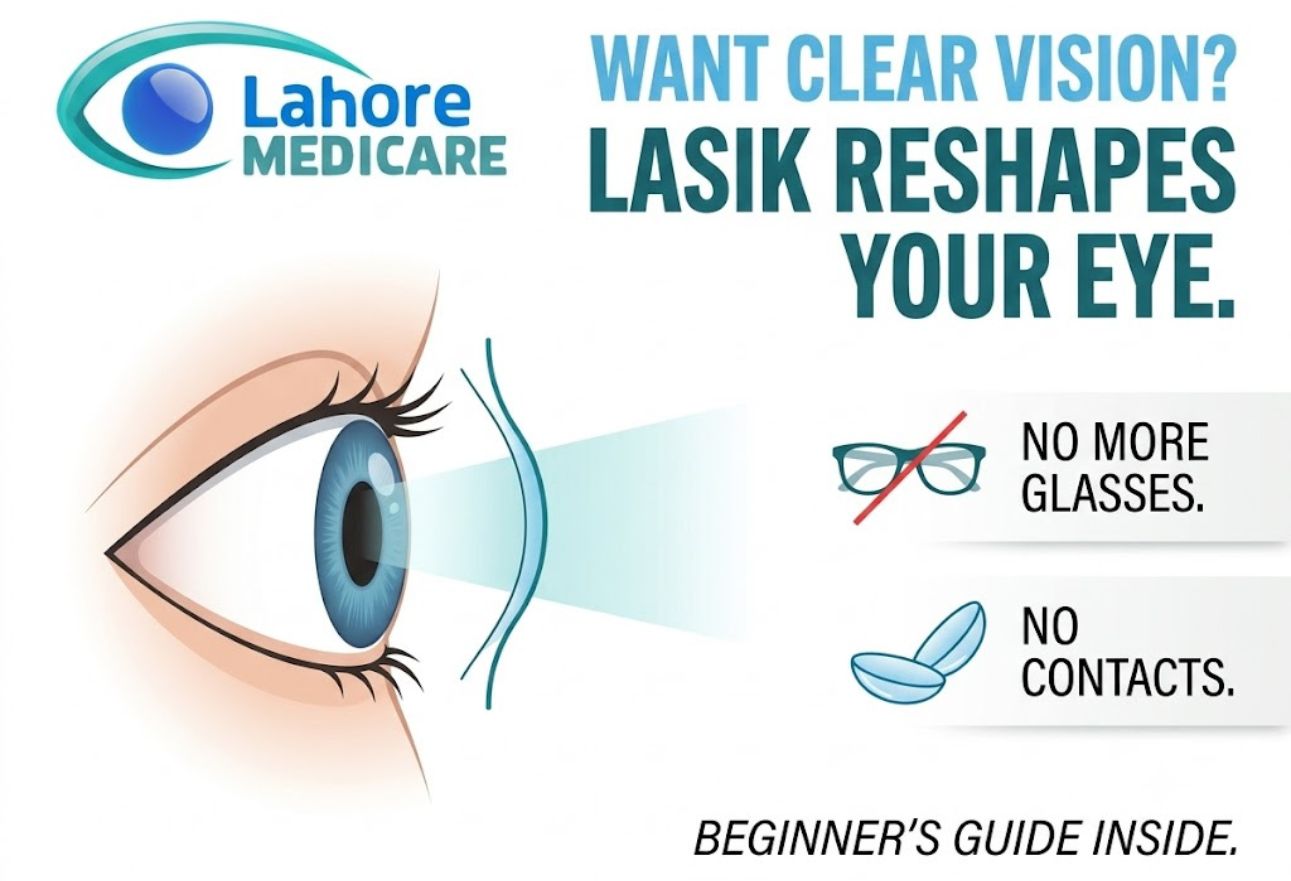
However, when the physical dimensions of the eyeball or the curvature of its surface deviate from ideal proportions, light no longer lands where it should. With nearsightedness (myopia), farsightedness (hyperopia) or astigmatism, the light is bent incorrectly, resulting in blurred vision. While standard glasses or contact lenses can correct vision temporarily by altering light paths before they hit your eye, reshaping the cornea itself also will provide the necessary refraction natively, eliminating the structural need for external plastic lenses entirely.
Refractive Error Profiles:
- Nearsightedness (myopia): When your eyeball is slightly longer than normal or when the cornea curves too sharply, light rays focus in front of the retina and blur distant vision. You can see objects that are close fairly clearly, but not those that are far away.
- Farsightedness (hyperopia): When you have a shorter than average eyeball or a cornea that is too flat, light focuses behind the retina instead of on it. This makes near vision, and sometimes distant vision, blurry.
- Astigmatism: When the cornea curves or flattens unevenly, the result is astigmatism, which disrupts focus of near and distant vision across multiple fields.
How Specialized Lasers Physically Remodel the Cornea
LASIK eye surgery is the best known and most commonly performed laser refractive surgery to correct vision problems. Known formally as Laser-assisted in situ keratomileusis (LASIK), this specialized outpatient procedure can be an alternative to glasses or contact lenses for qualifying candidates. Instead of operating on the internal deeper chambers of the eye, the entire process takes place safely on the accessible outer shielding layers.
During LASIK surgery, a special type of cutting laser is used to precisely change the shape of the dome-shaped clear tissue at the front of your eye (cornea) to improve vision. First, a microscopic, protective flap is created on the very surface of the corneal tissue. This flap is gently folded back to reveal the deeper, inner corneal layers underneath.
Next, a highly automated excimer laser applies cool, microscopic pulses of ultraviolet light to remove fractional amounts of tissue, micro-sculpting the curve based on your unique prescription. For nearsighted patients, the laser flattens an overly steep curve; for farsighted individuals, it steepens a flat surface; and for astigmatism, it smooths out an asymmetric shape into a perfectly uniform dome. Once complete, the protective flap is smoothed back into its original position, where it seals naturally without any medical stitches.
Diagnostic Benchmarks and Determining Candidacy
Because everyone possesses a distinct corneal thickness, curvature, and tear film composition, laser correction is never a one-size-fits-all solution. Determining whether your eyes are structurally prepared for a reshaping procedure requires a series of highly detailed digital mapping sessions. Specialists must verify that your current prescription has remained stable for a minimum of a year and that your underlying corneal tissue retains adequate structural volume to remain safe after sculpting.
Evaluating your personal suitability for a custom procedure at a fully equipped facility like Lahore Medicare ensures that every physical attribute of your visual system is measured with extreme precision. Advanced diagnostic technology creates a comprehensive three-dimensional map of your eye’s surface, tracking microscopic elevations and hidden structural variations. This extensive diagnostic vetting process is what makes the final visual outcomes so remarkably accurate and safe for modern patients.
What to Expect During Recovery and Beyond
One of the reasons this specific laser procedure has achieved such global popularity is the rapid timeline of physical recovery. Because the specialized laser works with cold, computerized pulses that do not damage surrounding tissues, the structural disruption to the eye is kept to an absolute minimum. Most patients are pleasant to discover that the actual laser reshaping takes less than a minute per eye, with the entire clinical visit lasting only a few hours.
Following the procedure, your eyes begin healing immediately. While it is completely normal to experience a temporary mild grittiness or light sensitivity during the first twelve hours, functional clarity typically returns by the very next morning. Accessing advanced Treatment by LASIK in lahore enables local patients to comfortably transition away from daily optical constraints under close medical supervision.
By closely following personalized post-operative instructions and attending routine checkups, individuals can protect their newly sculpted corneas and maintain crisp vision for decades. Reviewing the specialized clinical Procedures of treatment For lahore patients allows you to plan your journey toward visual independence with absolute confidence and peace of mind.
Frequently Asked Questions
Is the actual laser reshaping process painful?
No, the procedure is not painful. Before the surgeon begins, specialized numbing eye drops are applied to completely desensitize the eye surface. You may feel a mild sensation of pressure for a few seconds, but no sharp discomfort.
How does LASIK fix a nearsighted eye shape?
In a nearsighted eye, the cornea curves too sharply or the eyeball is too long. The computerized cutting laser gently removes microscopic tissue from the center of the cornea to flatten its shape, allowing light to focus perfectly on the retina.
Can astigmatism be corrected at the same time as myopia?
Yes. Astigmatism occurs when the cornea curves or flattens unevenly like a football. The modern excimer laser is fully capable of smoothing out these asymmetrical surface irregularities at the exact same time it corrects your primary prescription.
What is the minimum age required for LASIK eye surgery?
Candidates must be at least 18 years old. This age limit exists because a person’s prescription can continue to shift naturally throughout adolescence, and a stable prescription for at least one full year is required before surgery.
How long does a patient need to take off from work?
Most patients can return to standard office work and routine daily activities within 24 to 48 hours after surgery. However, you must avoid dusty environments, heavy sweat, rubbing your eyes, and swimming for a few weeks.
Why is corneal thickness so important for candidacy?
Because the laser must safely reshape the inner layers of the cornea by removing micro-layers of tissue, your eye must possess enough initial thickness to leave a strong, structurally stable base after the procedure is finished.
What is the purpose of the corneal flap in LASIK?
The superficial flap acts as a natural bandage. By folding the ultra-thin surface layer back before applying the laser and replacing it afterward, the eye can heal rapidly without the need for painful surgical stitches.
Will my vision remain permanently corrected after surgery?
Yes, the physical reshaping of the corneal tissue is permanent. However, while LASIK permanently fixes your initial refractive errors, it cannot stop the natural aging process of your internal lens, which happens to everyone over age 40.
Can a person with dry eye syndrome get laser surgery?
It depends on the severity. Mild dry eye can usually be managed before and after the procedure with lubricating drops. Severe chronic dry eye requires treatment and stabilization before a surgeon can safely recommend corneal sculpting.
What happens if I blink or move my eye during the procedure?
Modern laser systems feature sophisticated, high-speed eye-tracking technology. If your eye makes an involuntary microscopic movement or if you blink, the tracking system instantly adjusts the laser or pauses it safely until focus is restored.