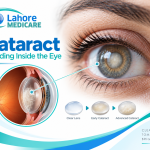

As we grow older, our bodies undergo many physical transformations. While we often anticipate changes in our joint mobility or skin elasticity, changes in visual acuity can catch us by surprise. Many individuals eventually notice that their daily environment begins to look faded, dim, or significantly hazy. This shift in clarity is often caused by a natural structural progression within the ocular lens. Recognizing the mechanism behind this clouding is the first step in learning how modern medicine can completely restore clear sight.
The Biological Process Behind Clouding of the Lens
The natural lens inside the human eye functions much like the clear lens of a high-performance camera. Positioned directly behind the pupil, its primary job is to focus light rays onto the retina at the back of the eye, producing sharp, well-defined images. In a healthy eye, this lens is perfectly transparent, composed of meticulously organized protein structures and water.
Cataracts is the clouding of the lens that leads to blurriness. Over time, the proteins within the biological lens naturally begin to break down and clump together, creating microscopic obstructions that scatter light instead of letting it pass smoothly through. While the natural aging process is the single most common factor behind this structural shift, it is not the only cause. A cataract can be caused by age, trauma, diabetes, toxic substances, certain medicines or by birth. No matter the initial trigger, the result remains the same: a gradual loss of the lens transparency required for crisp vision.
How Different Types of Cataracts Affect Daily Sight
The specific visual challenges an individual faces are heavily dictated by where and how the proteins clump together within the lens material. Because cataracts develop in different patterns, signs and symptoms vary depending on the type of cataract, though considerable overlap occurs across different patients.
People with nuclear sclerotic or brunescent cataracts often notice a reduction of vision as the core center of the lens hardens and turns a yellow or brown color over time. Nuclear cataracts typically cause greater impairment of distance vision than of near vision, meaning a patient might still read a book comfortably but struggle significantly to read road signs while driving. Conversely, those with posterior subcapsular cataracts usually complain of glare as their major symptom, which develops at the very back of the lens capsule and can make bright sunlight or oncoming nighttime headlights completely blinding.
Beyond general blurriness and glare, the progression of a cataract creates several other noticeable visual disruptions. Common symptoms include blurry vision, sensitivity to light, double vision, trouble in distinguishing colors such as blue or purple, and frequent changes to glasses or contacts prescriptions. Many patients also report seeing distinct colored halos around bright light sources due to the abnormal hydration of lens structures.
Diagnostic Evaluations and Determining Severity
Because cataracts develop slowly, many people adapt to their diminishing vision by increasing room lighting or upgrading their reading glasses. However, checking the true progression of the condition requires specialized clinical measurements rather than guesswork.
The severity of cataract formation, assuming no other eye disease is present, is judged primarily by a visual acuity test. This testing measures exactly how sharp your vision is at various distances under controlled lighting conditions. Eye care experts also look for subtle clues like frequent changes of glasses, which often indicates that the shape and density of the internal lens are actively shifting.
If you are experiencing persistent cloudiness or sudden glare, a comprehensive diagnostic assessment at a dedicated facility like Lahore Medicare can provide an accurate map of your ocular health. Professional diagnostics ensure that your symptoms are correctly identified and differentiate cataracts from other progressive retinal issues.
Modern Surgical Treatment and Choosing an Intraocular Lens
When an ocular lens becomes sufficiently cloudy to interfere with your ability to work, drive, or read safely, lifestyle adaptations are no longer enough. Because a cataract represents a permanent physical alteration of the lens proteins, it cannot be reversed with dietary supplements, lifestyle changes, or specialized eye drops. Fortunately, modern surgical interventions have made vision restoration exceptionally safe and efficient.
At Laser Vision Centre, treatment is performed via phacoemulsification (phaco) where the doctor makes a tiny incision in the eye and breaks up the lens using ultrasound waves. The old, clouded lens is removed, and an artificial intraocular lens (IOL) is put in its place to permanently restore visual crispness. This advanced micro-surgical method requires no lengthy hospital stays and allows for a rapid recovery period.
The pricing of the procedure is based on the type of lens implanted, and we provide Eyecryl (Indian Lens), Iriflex (German lens), Rayner (British lens) and Alcon (American lens). Selecting the ideal lens depends entirely on your personal lifestyle requirements, budget, and whether you want to eliminate your reliance on reading glasses after the procedure. Consulting with a specialist regarding Cataract Treatment in lahore allows you to review these options in detail. By matching your daily vision goals with the right Procedures of treatment, you can successfully eliminate chronic cloudiness and enjoy bright, clear sight once again.
Frequently Asked Questions
Can eye drops or lifestyle habits reverse a cataract?
No, there are no medical eye drops or lifestyle habits that can reverse or dissolve a cataract. The only scientific way to restore clarity is to physically remove the clouded biological lens and replace it with a clear artificial one.
Why do cataracts make it hard to see blues and purples?
As a nuclear cataract develops, the lens gradually turns a dark yellow or brownish tint. This natural discoloration acts like a filter, absorbing short-wavelength light and making it very difficult to distinguish between deep blues and purples.
What is the primary method used to diagnose a cataract?
The severity of a cataract is judged primarily by a visual acuity test along with a slit-lamp examination. This allows the eye doctor to magnify and inspect the internal lens structures to evaluate the exact density of the clouding.
What happens during a phacoemulsification procedure?
During phacoemulsification, a surgeon makes a microscopic incision in the eye, uses ultrasound waves to safely break up the hardened, cloudy lens into tiny fragments, gently vacuums those pieces out, and implants a permanent artificial lens.
How do premium intraocular lenses differ from each other?
Intraocular lenses differ by material, optical design, and country of manufacture. Options like Eyecryl, Iriflex, Rayner, and Alcon provide varying levels of crispness, UV protection, and ability to correct multi-distance vision.
Can a cataract cause double vision in a single eye?
Yes. As the protein clumping changes the density of the lens unevenly, light entering the eye can split into multiple pathways. This structural distortion often causes double vision or ghost images, even when your other eye is covered.
Why do cataracts cause frequent changes in prescription?
As a cataract develops, the lens often swells slightly and increases its focusing power. This temporary change shifts your eyesight and forces frequent changes to glasses or contacts prescriptions to maintain basic focus.
What causes a posterior subcapsular cataract to form?
While age is a factor, posterior subcapsular cataracts form at the back of the lens and are strongly linked to diabetes, high radiation exposure, eye trauma, or the long-term medical use of specific steroid medications.
How long does it take to recover from modern cataract surgery?
Because the phacoemulsification incision is incredibly small, many patients notice an improvement in vision within a few days. Complete physical healing of the eye tissue generally takes about four to six weeks post-procedure.
Is it possible for a cataract to return after surgery?
No, a cataract cannot grow back because the natural lens has been completely removed. However, some patients may develop a clear film blurriness behind the new lens months later, which is easily cleared with a quick laser treatment.