
Maintaining clear vision is vital for navigating our daily personal and professional lives. However, as time passes, many individuals notice a slow, progressive decline in how clearly they see the world. Shapes become indistinct, colors lose their natural vibrancy, and night driving turns into a stressful chore. When these changes take place, they are frequently caused by the development of cataracts. Understanding what causes this changes in the eye structure and how it alters your daily vision is essential for protecting your long-term eye health.
The Biological Process Behind Lens Clouding
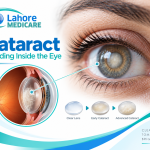
To understand how this condition develops, it helps to view the human eye like a camera. Inside the eye, directly behind the iris, sits a clear, flexible structure known as the crystalline lens. In a healthy eye, this lens focuses light precisely onto the retina, creating sharp images for the brain to process.
Cataracts is the clouding of the lens that leads to blurriness. When a cataract begins to form, the natural proteins within the lens start to clump together, turning a structure that should be completely transparent into a cloudy, translucent window. Light can no longer pass through cleanly, which creates a scattering effect that distorts your overall vision.
While many people believe this is solely an issue for the elderly, a cataract can be caused by age, trauma, diabetes, toxic substances, certain medicines or by birth. This wide range of causes means that anyone, from a young adult managing a systemic illness to someone recovering from an unexpected eye injury, can experience clouding. At Lahore Medicare, clinical observations show that managing underlying health conditions like diabetes is a crucial factor in reducing the speed at which these vision changes develop.
How Different Types of Cataracts Alter Your Vision
The way your sight changes often depends heavily on the specific path the clouding takes across the lens. Signs and symptoms vary depending on the type of cataract, though considerable overlap occurs across different patient experiences.
People with nuclear sclerotic or brunescent cataracts often notice a reduction of vision. This variation forms deep in the central zone of the lens, causing it to harden and turn yellow or brown over time. Nuclear cataracts typically cause greater impairment of distance vision than of near vision. This unique shifting of focus can sometimes create a temporary phenomenon known as “second sight,” where a patient’s reading vision briefly improves while their ability to see distant street signs or television screens deteriorates significantly.
Conversely, other variations affect how light enters the eye in bright environments. Those with posterior subcapsular cataracts usually complain of glare as their major symptom. This type forms at the very back of the lens capsule, directly in the path of incoming light. It frequently causes severe difficulty when trying to see in bright sunlight or when facing oncoming headlights during nighttime travel, making standard commuting highly uncomfortable.
Identifying Key Symptoms and Diagnostic Steps
Because the progression of a cataract is usually slow and painless, many individuals adapt to their declining vision without realizing how much clarity they have actually lost. Recognizing the collective warning signs early allows you to seek professional guidance before your independence is impacted.
The early stages of development bring about several distinct visual changes. Typical symptoms include blurry vision, sensitivity to light, double vision, trouble in distinguishing colors such as blue or purple, and frequent changes to glasses or contacts prescriptions. Some individuals also report seeing colored halos due to hydration of lens, which can cause points of light to appear surrounded by distracting, rings of color.
The severity of cataract formation, assuming no other eye disease is present, is judged primarily by a visual acuity test. This testing measures your ability to see fine detail at various distances under controlled clinical lighting. If your daily activities are being restricted by these visual changes, scheduling a comprehensive exam for a Cataract Treatment in lahore can help clarify your options and establish a safe path forward.
Advanced Surgical Solutions and Lens Options
When a cataract advances to the stage where changing your eyeglass prescription no longer provides sufficient clarity, surgical intervention becomes the standard, highly effective solution. Modern ophthalmic care has transformed this process into a highly precise, outpatient experience that requires minimal downtime.
At Laser Vision Centre, treatment is performed via phacoemulsification (phaco) where the doctor makes a tiny incision in the eye and breaks up the lens using ultrasound waves. The cloudy lens material is gently removed, and an intraocular lens (IOL) is put in its place to permanently restore visual focus. The entire process relies on advanced technology designed to optimize patient safety and recovery speed.
Choosing the right intraocular lens is an essential part of your treatment planning. The pricing is based on the type of lens implanted and we provide Eyecryl (Indian Lens), Iriflex (German lens), Rayner (British lens) and Alcon (American lens). These varied options allow patients to select a lens provider that fits their specific visual requirements and budgetary preferences. Discussing these options alongside the specialized clinical Procedures of treatment with your surgeon ensures a customized approach tailored entirely to your personal lifestyle needs.
Frequently Asked Questions
Can a cataract spread from one eye to the other?
No. Cataracts are localized changes that happen within the individual lens of each eye. While a person can develop them in both eyes over time due to aging or systemic health factors, the condition cannot physically spread from one eye to the other.
Why do cataracts cause double vision in a single eye?
As the proteins in the natural lens clump together, the transparency becomes uneven. This uneven clouding splits or scatters the light as it enters a single eye, creating multiple overlapping images on the retina, which causes double vision.
How does diabetes increase the risk of developing cataracts?
High blood sugar levels can lead to an accumulation of sorbitol and structural changes inside the lens of the eye. This metabolic shift speeds up the clouding process, causing individuals with diabetes to develop cataracts at an earlier age.
What are colored halos around light sources?
Colored halos are rings of light that appear around lamps or headlights. They occur due to the abnormal hydration of the lens as a cataract develops, which causes the incoming light to bend irregularly and separate into distinct colors.
What happens during a phacoemulsification procedure?
During phacoemulsification, a surgeon makes a micro-incision in the eye and utilizes precise ultrasound waves to break the cloudy lens into microscopic pieces. These fragments are gently vacuumed out, and a clear artificial lens is inserted.
What is the function of an intraocular lens (IOL)?
An intraocular lens is a permanent, artificial replacement for your eye’s natural lens. It performs the vital job of focusing light onto the retina, restoring the clear vision that was previously blocked by the cloudy cataract.
How do nuclear cataracts affect reading vision?
Nuclear cataracts cause the center of the lens to harden and yellow, which can temporarily increase the eye’s focusing power for close-up tasks. This can make reading easier for a short period, even while distance vision gets worse.
Why do subcapsular cataracts cause severe glare?
Because posterior subcapsular cataracts form at the back of the lens directly where light rays converge, they scatter light severely. This results in intense glare and halos, particularly in bright sunlight or under night traffic conditions.
Can lifestyle changes reverse the clouding of a cataract?
No. Once the proteins inside the natural lens have clumped together and turned cloudy, the physical structure cannot be reversed through lifestyle changes, diet, or eye drops. Surgical removal remains the only definitive treatment.
How is the overall severity of a cataract evaluated?
Ophthalmologists judge the severity primarily using a standardized visual acuity test. This helps measure how much the clouding interferes with your daily eyesight, ensuring treatment is recommended at the optimal time for your lifestyle.