Experiencing persistent irritation in your eyes can turn a standard day into a massive challenge. Many people living in busy urban environments frequently deal with sudden redness, irritation, and an uncomfortable watery sensation. While it is easy to assume that simple tiredness or dust is the culprit, these continuous symptoms often point toward a very common immune system response: ocular allergies. Understanding why your eyes react this way is the first step toward finding lasting relief and protecting your vision.
The Common Triggers of Eye Irritation
Ocular discomfort rarely happens without an environmental trigger. The human eye is constantly exposed to the air around us, making it highly sensitive to microscopic particles that can disrupt our comfort. These triggers generally fall into two distinct categories based on when and where they strike.
The most common causes of eye allergies are seasonal allergies to pollen and mold spores. People with seasonal hay fever (allergic rhinitis) normally notice their symptoms worsen when they go outdoors on days with high pollen counts. In regions with changing seasons and fluctuating vegetation, these airborne particles can spike dramatically, causing widespread seasonal issues for thousands of residents.
Conversely, outdoor air is not the only source of discomfort. Indoor allergens, such as dust mites and pet dander, can also cause eye allergies year-round. If you suffer from this type of allergy, you may notice your symptoms worsen during certain activities such as cleaning your house or grooming a pet. This persistent environmental exposure means that even staying indoors does not guarantee complete protection from a sudden flare-up.
Recognizing the Key Symptoms and Diagnosis
Identifying whether your discomfort stems from a temporary irritation or a true environmental sensitivity requires a closer look at how your body responds. An allergic reaction in the ocular region typically presents with a specific cluster of indicators that affect how you view your surroundings.
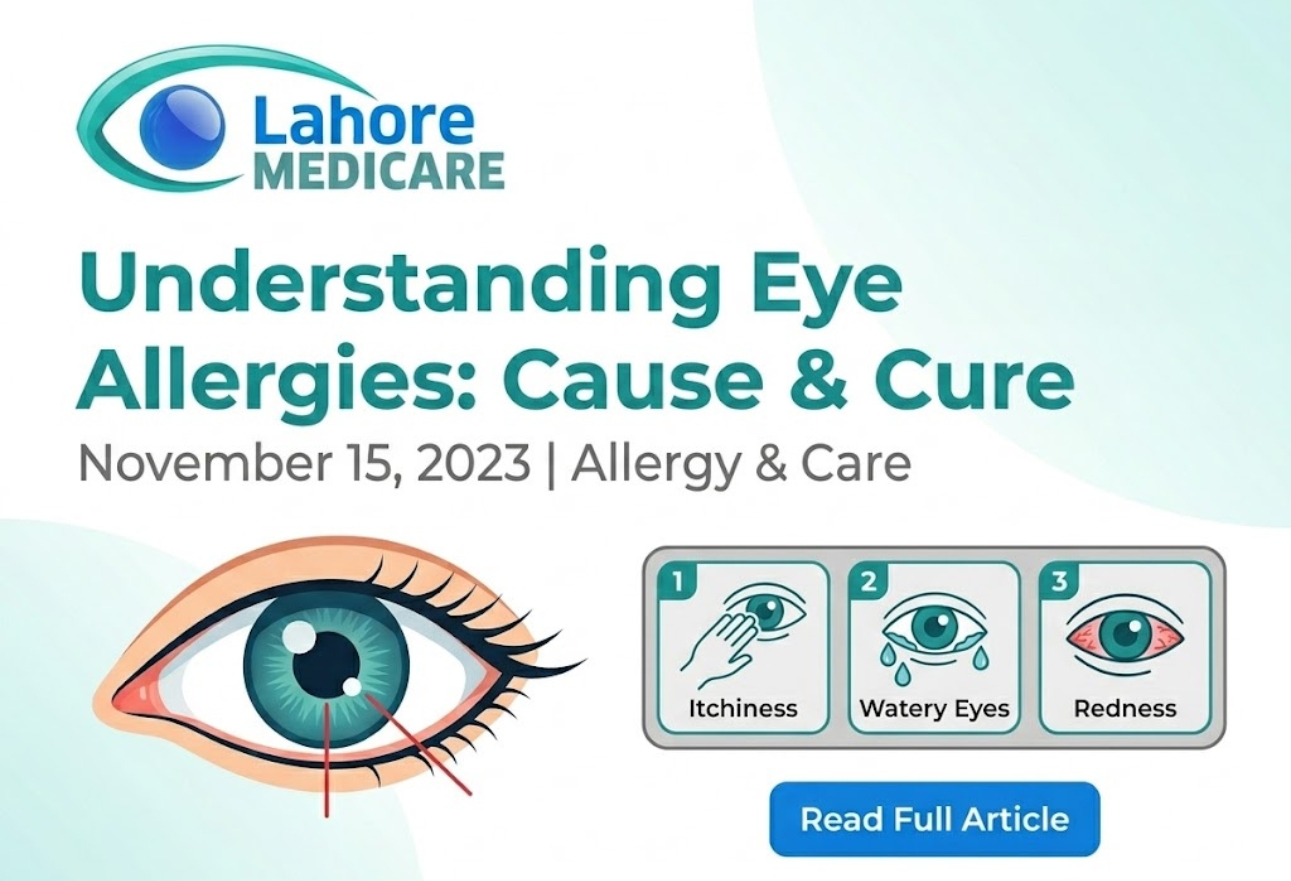
If your symptoms are related to an eye allergy, chances are you will have problems in both eyes. Typical symptoms include:
- Watery eyes
- Itchiness
- Sensitivity to light
- Redness
- Grittiness
- Eyelid swelling
These symptoms can occur alone or along with allergic rhinitis nasal symptoms. They typically appear shortly after exposure to the allergen, providing a clear clue about what might have caused the sudden change. Managing these frustrating conditions effectively starts with identifying the root cause at a specialized clinic like Lahore Medicare, where experts help differentiate simple strains from deeper ocular issues.
Medical Evaluation and Allergy Testing
When lifestyle adjustments and standard over-the-counter drops fail to provide relief, a professional medical evaluation becomes necessary. Guessing your triggers often leads to ineffective self-treatment and prolonged discomfort.
An allergist / immunologist, often referred to as an allergist, has specialized training and experience to determine which allergens are causing your symptoms and discuss which treatment options are right for you. An allergist / immunologist can also offer valuable advice for avoiding your triggers. Working with these specialists allows you to move past temporary fixes and address the precise biological causes of your eye issues.
Your allergist will take a detailed health history, perform a physical exam and then most likely test you for allergies. Skin prick tests may show the results within 20 minutes, though delayed reactions may take longer to appear. Blood tests and conjunctival challenge tests may also be considered.
An allergist performing a conjunctival challenge test will apply either dry materials or liquid materials, containing allergen concentrations, to one eye and apply a placebo to the other eye to serve as a control. This precise evaluation pinpoints exactly what triggers your Allergy so you can plan a targeted defense.
Management Options and Path to Relief
While discovering your specific triggers provides an excellent roadmap for avoidance, modern medical science also provides several pathways to minimize daily discomfort. Dealing with severe or chronic eye symptoms requires a balanced approach combining environmental control with specialized clinical care.
There is no known cure for eye allergies, but various management strategies can significantly reduce the impact on your life. For immediate relief, contact lenses and glasses are available with filters to help color deficiencies, and specialized therapeutic eye drops can soothe active inflammation. Fortunately, the vision of most color-blind and allergy-prone people is normal in all other respects and certain adaptation methods are all that is required.
For individuals facing complex ocular issues alongside environmental sensitivities, exploring the advanced Procedures of treatment offered by eye care professionals ensures that your vision remains uncompromised. From prescription antihistamines to specialized therapies, professional guidance helps restore clarity and comfort to your daily routine.
Frequently Asked Questions
Why do eye allergies affect both eyes simultaneously?
Because airborne allergens like pollen and dust float freely in the atmosphere, they typically come into contact with both eyes at the exact same time. This widespread exposure causes a symmetrical immune response in both eyes.
Can indoor dust mites cause symptoms during the winter?
Yes. Indoor allergens like dust mites and pet dander persist inside homes throughout the entire year. Symptoms often worsen in winter when windows remain closed, reducing ventilation and increasing allergen density.
What is a conjunctival challenge test?
This diagnostic test involves a specialist applying a tiny, controlled amount of a specific allergen to one eye while using a neutral placebo in the other. It helps confirm the exact trigger of your eye symptoms.
How fast do skin prick allergy test results appear?
Skin prick tests are highly efficient diagnostic tools. Most patients will begin to see visible results on their skin within 20 minutes, though some delayed reactions can occasionally take a few hours to show.
Are itchy eyes always a sign of an environmental allergy?
Not always, though itchiness is a hallmark sign of an allergy. Persistent itching can also be caused by dry eye syndrome or local bacterial infections, which require a professional evaluation to distinguish.
Can eye allergies cause my eyelids to swell?
Yes. The delicate tissues of your eyelids contain numerous mast cells. When these cells detect an invading allergen, they release histamines that cause localized fluid retention and noticeable swelling.
Does rubbing my eyes help relieve allergy itchiness?
No, rubbing actually worsens the issue. The physical pressure causes mast cells in the eye to rupture and release even more histamines, which intensifies the itching sensation and increases redness.
Can seasonal eye symptoms occur without a runny nose?
Yes. Ocular allergy symptoms can happen entirely on their own. While many people experience them alongside nasal hay fever, your eyes can react independently to high ambient pollen counts.
What is the role of an allergist in treating eye irritation?
An allergist possesses the specialized medical training required to accurately test your immune responses. They help identify your precise environmental triggers and design a long-term management plan.
Will eye allergies permanently damage my eyesight?
Fortunately, standard eye allergies do not cause permanent vision damage. The underlying vision remains normal in all other respects, requiring only proper adaptation methods and targeted symptom relief.