Waking up with bloodshot eyes or dealing with a persistent, gritty sensation throughout the day is a frustratingly common experience. For many people, eye irritation isn’t just a minor cosmetic issue, it is a continuous source of physical discomfort that can disrupt work, study, and daily activities. While it is easy to blame a lack of sleep or excessive screen time, persistent redness and irritation are frequently signs of an immune system response, commonly known as an ocular allergy.
Understanding what triggers these continuous symptoms is the first step toward finding lasting relief. Whether your discomfort flares up during specific seasons or persists throughout the entire year, identifying the root cause allows for targeted management rather than temporary fixes.
Identifying the Culprits Behind Eye Allergies
When looking at what causes constant eye redness and irritation, environmental factors are usually at the top of the list. The surface of the eye is highly sensitive and directly exposed to the air, making it a prime target for airborne particles that trigger an immune reaction.
Seasonal Triggers and Outdoor Exposures
The most common causes of eye allergies are seasonal allergies to pollen and mold spores. Plants release microscopic pollen grains into the air during specific times of the year, such as spring or autumn, to fertilize other plants. Mold spores thrive in damp conditions and can easily travel through the wind. People with seasonal hay fever (allergic rhinitis) normally notice their symptoms worsen when they go outdoors on days with high pollen counts. For residents navigating changing seasonal weather, these airborne particles create an environment where the eyes are under constant irritation.
Indoor Allergens and Year-Round Discomfort
Ocular irritation is not confined to the outdoors. Indoor allergens, such as dust mites and pet dander, can also cause eye allergies year-round. Dust mites are microscopic organisms that thrive in household textiles like carpets, bedding, and upholstered furniture. Pet dander consists of tiny, even microscopic, flecks of skin shed by cats, dogs, rodents, birds, and other animals with fur or feathers. If you suffer from this type of allergy, you may notice your symptoms worsen during certain activities such as cleaning your house or grooming a pet. Because these triggers remain inside the home or office, they lead to chronic, low-grade inflammation that makes redness feel permanent.
Recognizing the Telling Symptoms of an Eye Allergy
Determining whether your eye redness is caused by a simple lack of rest, a viral infection, or an allergic reaction requires looking closely at how the symptoms present themselves. A key characteristic of an allergic response is its symmetry and the speed at which it develops.
If your symptoms are related to an eye allergy, chances are you will have problems in both eyes. Unlike localized bacterial infections that might start in one eye, an airborne allergen affects both eyes simultaneously. Typical symptoms include:
- Watery eyes and excessive tearing
- Intense, persistent itchiness that drives a desire to rub the eyes
- Increased sensitivity to light, making bright rooms or sunlight uncomfortable
- Visible redness across the whites of the eyes (the conjunctiva)
- A persistent gritty sensation, as if a speck of dust is trapped under the eyelid
- Eyelid swelling, ranging from mild puffiness to heavy, inflamed lids
These symptoms can occur alone or along with allergic rhinitis nasal symptoms, such as sneezing, a runny nose, or a congested nasal passage. They typically appear shortly after exposure to the allergen, making it easier to trace back the reaction to a specific environment, such as a dusty room or a park during peak pollen season.
The Path to an Accurate Diagnosis
When over-the-counter lubricating drops fail to provide relief, guessing at the cause of your discomfort can delay proper healing. Seeking the assistance of a medical specialist is necessary to map out a clear path forward. An allergist / immunologist, often referred to as an allergist, has specialized training and experience to determine which allergens are causing your symptoms and discuss which treatment options are right for you. An allergist / immunologist can also offer valuable advice for avoiding your triggers.
Your journey to clearer vision begins with a comprehensive medical assessment. Your allergist will take a detailed health history, perform a physical exam and then most likely test you for allergies. This clinical evaluation helps separate an Eye Allergy from more serious ocular conditions that can mimic standard redness but require vastly different medical interventions.
To narrow down the exact triggers, specialists rely on precise diagnostic procedures:
- Skin Prick Tests: This is the most common diagnostic tool. A tiny amount of a suspected allergen is placed on the skin, usually on the forearm or back, and the skin is lightly scratched. Skin prick tests may show the results within 20 minutes, though delayed reactions may take longer to appear. A raised, itchy bump indicates a positive reaction to that specific substance.
- Blood Tests: In cases where skin testing cannot be performed safely due to skin conditions or specific medications, blood tests can measure the presence of allergy-related antibodies in the bloodstream.
- Conjunctival Challenge Tests: When standard tests are inconclusive, a more direct approach is utilized. An allergist performing a conjuctival challenge test will apply either dry materials or liquid materials, containing allergen concentrations, to one eye and apply a placebo to the other eye to serve as a control. By observing how the ocular tissue reacts compared to the untreated eye, the specialist can confirm whether that specific allergen is the source of your chronic irritation.
Modern Medical Interventions and Treatment Options
There is no known cure for eye allergies, but modern ophthalmic care offers highly effective ways to manage symptoms and protect your vision. Managing chronic redness involves a combination of environmental control, lifestyle adjustments, and targeted medical therapies.
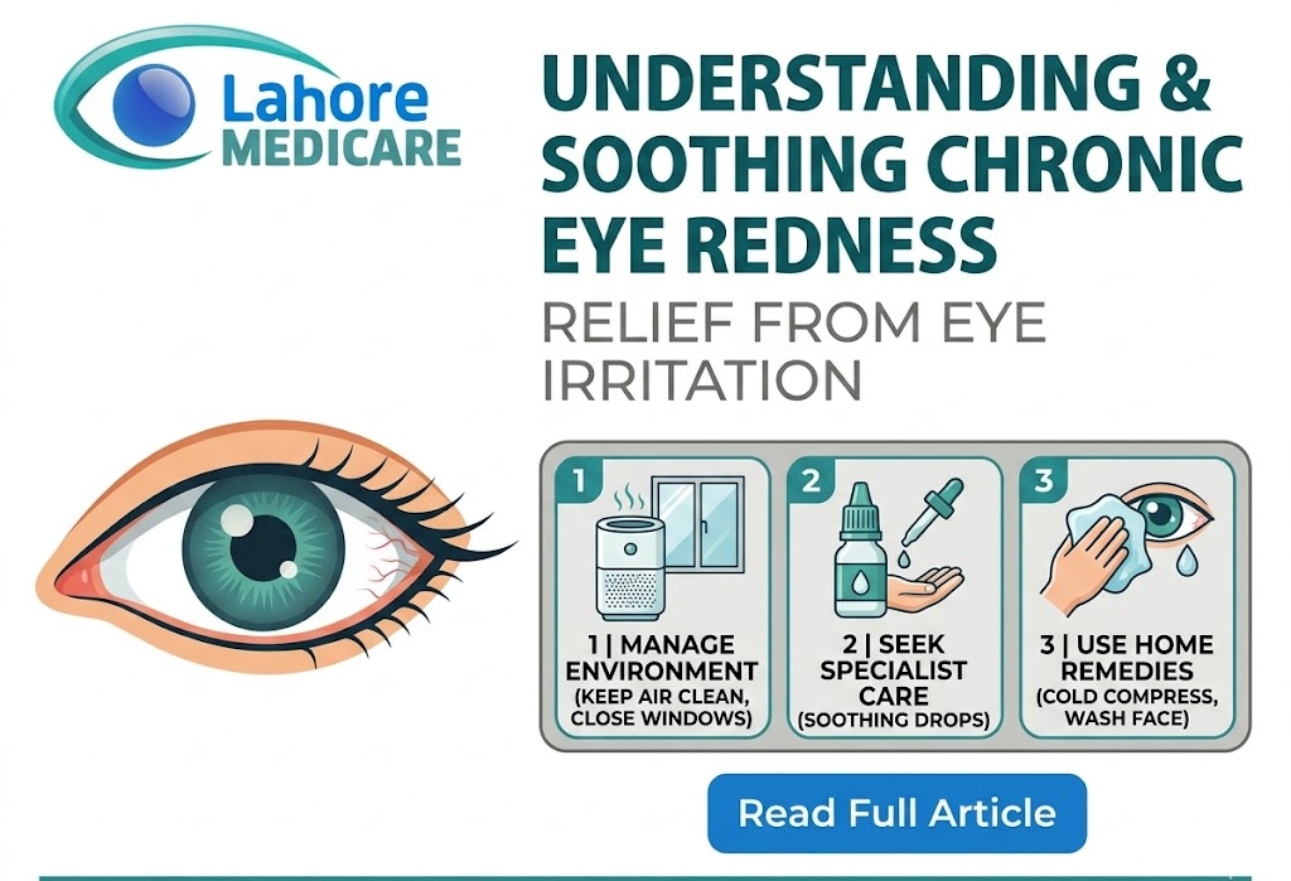
For immediate relief, avoiding known triggers is paramount. This means closing windows during high-pollen seasons, utilizing air purifiers equipped with HEPA filters inside the home, and washing your hands immediately after interacting with domestic animals. However, when avoidance isn’t enough to curb the inflammation, professional clinical care becomes necessary.
Contact lenses and glasses are available with filters to help color deficiencies, if needed, but for allergy sufferers, specialized therapeutic eye drops are the primary line of defense. These treatments work by blocking the release of histamines, the chemicals your immune system produces that cause swelling, redness, and itching. Fortunately, the vision of most color-blind people is normal in all other respects and certain adaptation methods are all that is required; similarly, eye allergy patients rarely experience permanent vision changes if the condition is managed promptly.
At Lahore Medicare, our specialists guide patients through customized care paths, ensuring that prescription eye drops, such as mast cell stabilizers or anti-inflammatory medications, are used safely to avoid the rebound redness often caused by prolonged use of generic, over-the-counter pharmacy drops. Understanding the exact Procedures of treatment suited for your specific eye type ensures that your chronic irritation is addressed safely without risking the long-term health of your cornea or retina.
Frequently Asked Questions
Can eye allergies cause permanent damage to my vision?
In most standard cases, eye allergies cause temporary discomfort like redness and itching without threatening your sight. However, severe, untreated chronic allergies can cause you to rub your eyes constantly, which may lead to corneal scratches or inflammation that impacts long-term visual clarity.
How can I tell the difference between viral pink eye and an eye allergy?
Allergies almost always cause intense itching and affect both eyes simultaneously, often accompanied by a runny nose. Viral pink eye (conjunctivitis) typically starts in one eye, causes a watery or sticky discharge, may feel painful rather than itchy, and is highly contagious.
Why do my eyes feel gritty and red when I am cleaning my house?
Cleaning stirs up indoor allergens like dust mites, mold spores, and pet dander that have settled into carpets and furniture. When these particles become airborne, they land directly on the moist surface of your eyes, triggering a rapid allergic reaction.
What is a conjunctival challenge test?
This is a specific diagnostic test where an allergist applies a tiny, controlled amount of a liquid or dry allergen directly to one eye while using a neutral placebo drop in the other. This allows the specialist to watch the reaction in real-time to confirm a specific allergy trigger.
Are over-the-counter redness relief drops safe to use every day?
No, using over-the-counter “get the red out” drops for more than a few days in a row can cause a dependency known as rebound hyperemia. When you stop using the drops, the blood vessels in your eyes can swell even larger, making the redness worse than before.
Can air conditioning help reduce my seasonal eye allergy symptoms?
Yes, running an air conditioner helps because it allows you to keep doors and windows tightly closed, blocking outdoor pollen and mold spores from entering your living space. Many AC units also help filter out floating indoor dust particles.
Why do my eye allergy symptoms get worse when I go outdoors?
On days with high pollen counts, wind-borne pollen grains from trees, grasses, or weeds enter the air in massive quantities. When you step outside, these microscopic particles come into direct contact with your eyes, causing symptoms to flare up immediately.
What should I do if a skin prick test does not show what I am allergic to?
If a standard skin prick test is inconclusive or cannot be performed, your allergist may recommend a blood test or a specialized conjunctival challenge test to evaluate how your eye tissue reacts directly to specific concentrations of allergens.
Can wearing contact lenses make my eye allergy symptoms worse?
Yes, airborne allergens can stick to the surface of contact lenses, trapping the irritating particles against your sensitive eye tissue. Specialists often recommend switching to daily disposable lenses or wearing glasses during peak allergy seasons to reduce irritation.
Does washing my face help relieve itchy, watery eyes caused by allergies?
Washing your face and gently rinsing your eyelids with cool water is a very effective way to physically remove trapped pollen or dust from around your eyes. Applying a cold, wet washcloth over closed eyes also helps reduce swelling and itching.