
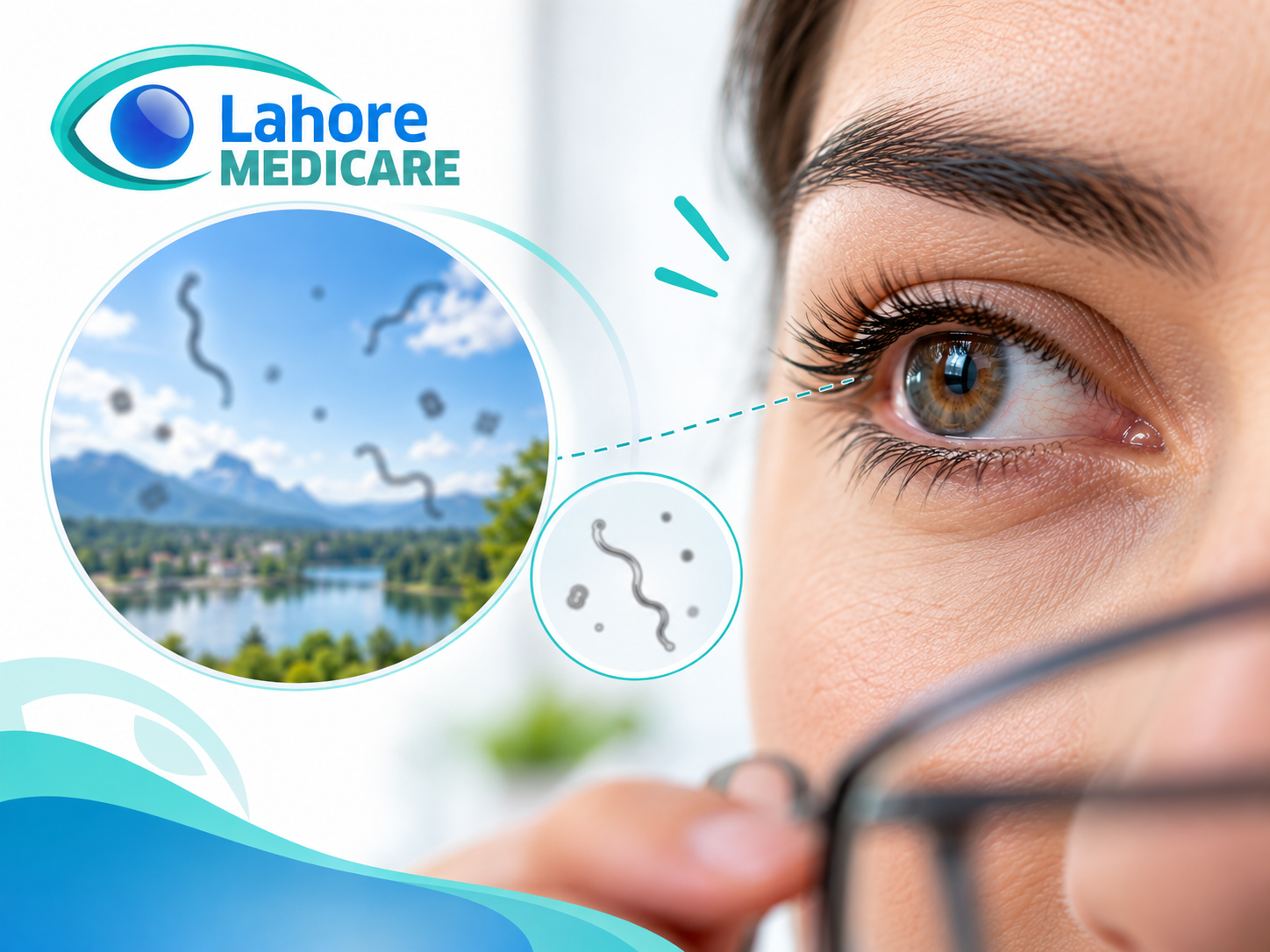
Have you ever noticed small grey spots, dark dots, or thin lines moving across your vision? You might try to blink or wipe your eyes, but those small shapes keep moving wherever you look. Seeing spots or small lines in your vision is actually very common. Most of the time, floaters are just a normal part of getting older. However, if you suddenly see a lot of new spots, it can be a sign that you need to see an eye doctor quickly.
Understanding what floaters are, why they happen, and how they relate to common eye issues can protect your eyesight.
What Are Eye Floaters?
Floaters are not on the outside of your eye. They are actually inside your eye. Inside your eye, there is a clear, jelly-like liquid called the vitreous humor. When you are young, this jelly is smooth and clear. As you get older, this jelly slowly becomes thin and watery. As the jelly changes, tiny pieces inside it clump together. These small clumps cast shadows on the back wall of your eye (the retina) when light comes in. What you are seeing are those tiny shadows moving around when you shift your eyes.
Common Reasons You See Floaters
Aging is the main reason floaters happen, but several specific eye issues can cause them too.
1. Getting Older and Vitreous Changes
When you reach your 40s or 50s, the eye jelly starts to shrink and pull away from the back wall of your eye. This is a very normal part of growing older, and it often creates new floaters.
2. Cataracts and Post-Surgery Awareness
A cataract is the gradual clouding of the natural lens inside your eye. While cataracts do not directly create floaters, having cloudy vision can hide them. Once patients get cataract treatment or surgery, more light enters the eye, making existing floaters stand out much more clearly than before.
3. Glaucoma and Internal Eye Pressure Changes
Glaucoma is a serious condition caused by high fluid pressure inside the eye that damages the optic nerve. While floaters are not a direct symptom of early glaucoma, pressure changes and ongoing optic nerve stress require careful monitoring alongside any new vision spots.
4. Eye Inflammation (Uveitis)
Uveitis is the swelling or inflammation of the middle layer of the eye. This swelling can release tiny inflammatory cells directly into the eye jelly. These cells show up as small dark specks or sudden clusters of floaters in your view.
5. Nearsightedness (Myopia)
People who need glasses to see far away often have slightly longer eyeballs. This structural difference causes the jelly inside the eye to age faster, so nearsighted people often notice floaters at a younger age.
How Health Conditions and Retinal Diseases Affect Floaters
Sometimes, floaters are an early warning sign of deeper retinal problems or ongoing chronic health issues.
For example, people living with diabetes need to check their eyes regularly. High blood sugar can weaken the tiny blood vessels in the retina, causing them to leak small drops of blood into the eye jelly. This leaking often looks like sudden dark streaks or a shower of new floaters. To learn more about how diabetes, glaucoma, and cataracts impact your sight, you can read about chronic eye diseases and conditions.
If an eye exam shows a leaking vessel or a small retinal tear, eye doctors can perform targeted laser procedures to seal the tear before it causes severe sight loss. You can learn more about how specialists repair these issues by reading about retinal laser treatment options.
When Are Floaters a Warning Sign?
Most floaters are harmless, and your brain slowly learns to ignore them over time. However, a sudden change in floaters can mean a serious problem like a retinal tear or detachment.
See an eye doctor right away if you notice:
- A sudden jump in the number of new floaters
- Sudden flashes of light in your eye
- A dark shadow or curtain covering part of your vision
- Sudden blurry vision
Getting help quickly can save your eyesight. If you are in Lahore, you can get a full checkup from experienced eye doctors in lahore.
How Eye Doctors Check Your Eyes
When you visit an eye clinic, the doctor puts special drops in your eyes to make your pupils larger. Then, they use a bright light and special magnifying lenses to look deep inside your eye.
This allows the doctor to check your eye jelly and make sure the retina at the back of your eye is healthy and free from tears.
Can Floaters Be Removed?
There are no eye drops, home remedies, or special diets that can make existing age-related floaters disappear.
For most people, the safest option is simply ignoring them. Over a few months, floaters often sink down and move out of your direct line of sight.
Eating healthy food, keeping your blood pressure and blood sugar normal, and having regular eye exams are the best ways to care for your eyes. If you have sudden vision changes, visiting a specialist eye hospital in lahore can give you peace of mind and protect your sight.
Frequently Asked Questions
Are eye floaters permanent?
Yes, floaters stay inside your eye jelly, but your brain learns to ignore them over time so you notice them much less.
Can cataracts cause floaters?
Cataracts themselves do not cause floaters, but cloudiness from cataracts can hide them. After cataract removal, floaters often become much more visible because vision is clear again.
How are floaters related to glaucoma?
Floaters do not cause glaucoma, but both conditions affect the internal structures of the eye. Seeing floaters along with eye pain or pressure requires immediate medical review.
What is uveitis and how does it cause floaters?
Uveitis is inflammation inside the eye. This inflammation creates small clumps of immune cells in the eye jelly, which look like dark floating spots.
Why do I see floaters more when looking at a white wall or clear sky?
Bright, plain backgrounds create a strong contrast, making the shadows cast by floaters much easier to spot.
Can stress cause floaters?
Stress does not create new floaters, but high stress can make you pay more attention to the floaters you already have.
Are flashes of light dangerous with floaters?
Flashes mean the jelly is pulling on the back wall of your eye. This can signal a retinal tear, so an eye doctor should check it right away.
Do eye drops cure floaters?
No over-the-counter eye drops can remove floaters because floaters are deep inside the eye jelly where surface drops cannot reach.
Does looking at screens cause floaters?
Screens do not cause floaters, but looking at bright white screens makes existing floaters easier to see.
Does drinking water reduce floaters?
Drinking water is great for your overall health, but it will not dissolve floaters that have already formed.