
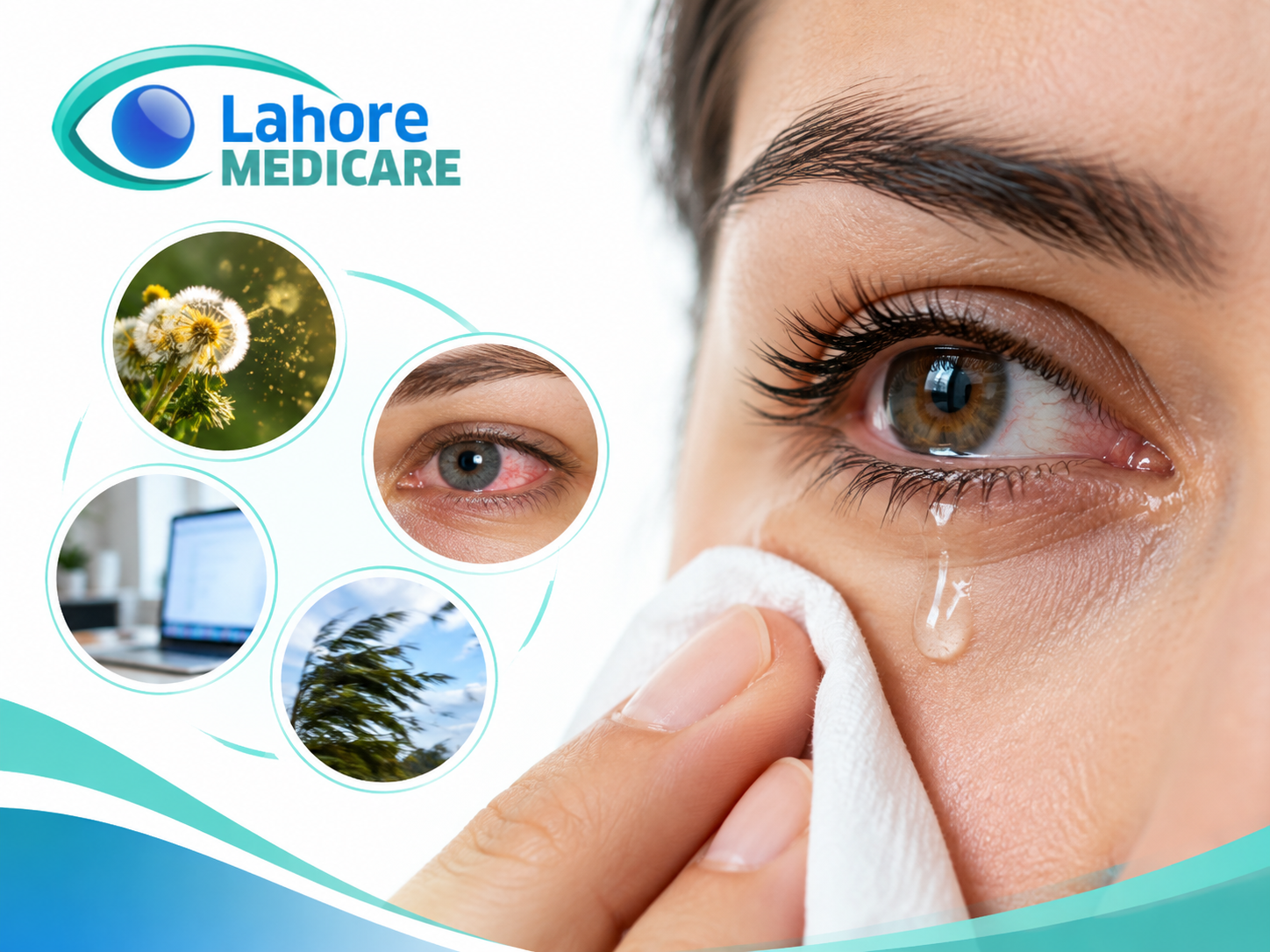
Having tears constantly spilling over your cheeks can make simple daily tasks exhausting. Whether your vision gets blurry while driving down Ferozepur Road or your eyes overflow while working on a laptop, excessive tearing is one of the most frequent complaints evaluated at an eye clinic.
It often feels like a puzzle. You might wonder why your eyes produce a flood of fluid when they actually feel uncomfortable, dry, or irritated.
Tears serve a vital purpose by bathing the surface of your eye, keeping it smooth, clear, and protected from dust and airborne pollutants. However, when the balance between tear production and normal drainage breaks down, water accumulates and spills over your eyelids. Understanding why this happens is the first step toward finding relief.
How Your Eye Drainage System Works
To understand why your eyes water, it helps to look at how tear production works. Your eyes usually overflow for one of two main reasons.
First, your eyes may produce a sudden flood of reflex tears because the surface is irritated by an external trigger or underlying inflammation. Second, your eyes might produce a completely normal volume of tears, but the small drainage channels located near the inner corner of your eyelids cannot drain them away fast enough.
When these drainage channels become narrowed or obstructed, tears have nowhere to go except over your lower eyelids. Pinpointing which mechanism is responsible allows an eye care specialist to recommend the right care plan.
Common Watery Eyes Causes
Excessive tearing can stem from everyday environmental factors, lifestyle habits, or structural issues within the eye and surrounding tissues.
Dry Eye Syndrome and Reflex Tearing
It sounds completely contradictory, but dry eye syndrome is actually one of the leading watery eyes causes. When your eye fails to produce high-quality lubricating tears, the delicate front surface becomes dry, inflamed, and easily irritated. In response to this discomfort, your nervous system signals the tear glands to flood the eye with reflex tears. These reflex tears consist mostly of water and lack the essential oils needed to coat the surface properly. As a result, they wash away quickly without providing long-term moisture, leaving you with stinging and burning eyes that continue to overflow.
Environmental Factors and Digital Eye Strain
Living in a busy city like Lahore exposes your eyes to high levels of dust, smog, vehicle emissions, and dry indoor air conditioning. When exposed to watery eyes in cold wind or heavy pollution, your eyes automatically produce extra fluid to clear away foreign particles.
Similarly, extended screen time presents a major challenge for students and office workers. When staring at computers or phones for hours, your natural blink rate decreases significantly. This leads to eye watering screen time issues, where reduced blinking dries out the eye surface and causes sudden bursts of reflex tearing.
Blocked Tear Ducts and Drainage Issues
Tears normally drain through microscopic openings in the corners of your eyelids, traveling down small tubes into your nose. If these pathways become narrow or obstructed, tears collect in the eye and overflow. Recognizing blocked tear duct symptoms such as localized swelling near the nose, recurrent eye infections, or tears overflowing eyes without any clear trigger is essential for getting appropriate medical care.
Older adults and individuals with a history of sinus infections or nasal trauma are particularly susceptible to blocked tear channels.
Eyelid Inflammation and Eyelid Alignment Problems
Blepharitis is a common condition where the tiny oil glands located at the root of your eyelashes become clogged or inflamed. Without a proper oil layer to seal your tear film, tears evaporate too rapidly. This leads to persistent irritation, a gritty feeling in eye, and watery eyes morning crusting.
Additionally, age-related changes can alter the physical position of your eyelids:
- Ectropion: The lower eyelid turns outward, pulling the drainage opening away from the eye surface so tears cannot enter the channel.
- Entropion: The eyelid turns inward, causing eyelashes to rub directly against the cornea, leading to pain, heavy watering, and potential surface scratches.
- Eye Allergies and Infections
Seasonal allergies triggered by pollen, dust mites, or pet dander cause significant inflammation along the eye surface. Allergic reactions typically produce heavy watering accompanied by intense itching, redness, and swollen lids.
Meanwhile, viral or bacterial infections cause constant eye discharge, deep redness, and heavy tearing that require proper clinical evaluation.
How Broader Health Conditions Impact Your Vision
Watery eyes do not always occur in isolation. They are frequently linked to broader health factors, chronic illnesses, or recent vision procedures.
For example, individuals managing long-term health conditions like diabetes need to pay extra attention to their eye health. Over time, fluctuating blood sugar levels can affect the delicate nerves on the eye surface, leading to irregular tear production, reduced sensation, and chronic surface irritation. Understanding how systemic issues impact vision and seeking medical evaluation for chronic eye conditions and diseases can help patients identify early warning signs before severe complications arise.
Similarly, as cataracts develop, increased glare and light sensitivity can trigger reflex watering outdoors or while driving at night. If you experience visual changes alongside persistent eye discomfort, exploring modern advanced eye care treatments offered by specialized centers can help restore visual clarity and everyday comfort.
Furthermore, temporary eye dryness and reflex watering are normal parts of the initial recovery phase following vision correction treatments, such as LASIK. Patients recovering from corrective procedures should follow their post-care instructions carefully while the corneal nerves heal.
Diagnostic Tests and Treatment Options
Finding lasting relief from epiphora treatment depends entirely on receiving an accurate diagnosis from a qualified eye doctor.
During a comprehensive evaluation at a dedicated clinic, an ophthalmologist examines your eyelids, tear film quality, and corneal surface using a slit-lamp microscope. Depending on your symptoms, specific diagnostic tests may be performed:
- Tear Film Evaluation: Measures the stability and moisture level of your natural tear film.
- Duct Flushing: A gentle procedure to check whether your tear drainage channels are clear or blocked.
- Diagnostic Imaging: Advanced scans, such as an ultrasound scan of the eye, help evaluate deeper soft tissues when internal blockages or structural masses are suspected.
Treatment strategies vary based on the underlying cause:
- For Surface Dryness: Prescribing specialized lubricating eye drops for watery eyes or anti-inflammatory drops to rebuild the protective tear film.
- For Allergies: Recommending targeted antihistamine drops to calm seasonal eye reactions.
- For Blocked Ducts: Performing minor procedures to flush, dilate, or surgical reopen closed tear pathways.
- For Eyelid Issues: Performing minor corrective procedures to realign eyelids or clear clogged oil glands.
When seeking clinical care, consulting with a top eye specialist in lahore ensures access to accurate diagnostics and tailored management plans.
Practical Habits for Daily Relief
While professional care addresses structural and medical issues, adopting healthy daily habits helps protect your eyes from everyday strain:
- Practice Screen Hygiene: Follow the 20-20-20 rule—every 20 minutes, look at an object 20 feet away for 20 seconds to encourage full, natural blinks.
- Wear Protective Eyewear: Use wraparound sunglasses outdoors to shield your eyes from wind, dust, and harsh sunlight.
- Maintain Eyelid Cleanliness: Apply a warm compress to closed eyelids for five minutes daily to keep eyelash oil glands clear.
- Avoid Harsh Rubbing: Never rub your eyes forcefully, as this worsens surface inflammation and can introduce bacteria.
If you are looking for guidance on safe watery eyes remedies at home, simple adjustments like using air humidifiers and preservative-free artificial tears can provide immediate comfort.
When to Seek Urgent Medical Care
Mild watering caused by temporary cold air or light dust usually resolves on its own. However, persistent tearing that disrupts daily reading or driving requires a professional examination.
You should consult a specialist promptly if you notice any of these eye watering emergency signs:
- Sudden, severe eye pain or deep pressure
- Unexplained changes in vision or watery eyes blurry vision
- Heavy yellow or green eye discharge
- Redness, swelling, or a painful lump near the inner corner of your eye
- A sensation that a foreign object is stuck under your eyelid
For individuals seeking specialized consultation or diagnostic testing, booking an appointment at the best eye hospital in lahore allows an experienced specialist to evaluate your symptoms thoroughly and recommend a personalized treatment plan.
Frequently Asked Questions
What is the most common cause of watery eyes in adults?
Dry eye syndrome is the most common cause. When the eye surface gets dry and irritated, your body reacts by producing a flood of watery reflex tears that easily overflow.
Can allergy drops prevent eyes from watering constantly?
If your watering stems from allergic conjunctivitis, antihistamine drops reduce itching and tearing. However, allergy drops will not help if the underlying issue is a blocked tear duct.
Why do my eyes water heavily when I am reading or watching TV?
When focusing on screens or books, your blink rate drops significantly. This causes your natural tear film to dry out quickly, triggering a sudden release of reflex tears.
Is a blocked tear duct considered a medical emergency?
A blocked tear duct is generally not an immediate emergency, but untreated blockages can trap fluid and bacteria, leading to painful infections and swelling near the nose.
How can I tell if my watery eyes are caused by dry eye syndrome?
If your eyes sting, burn, feel gritty like sand, or water heavily during visual tasks, dry eye syndrome is a very likely underlying cause.
Can cataracts make your eyes water when outdoors?
Watery eyes are not a direct symptom of cataracts, but cataracts increase glare sensitivity in bright sunlight, which often triggers reflex tearing.
What should I do if my eyes water heavily in windy weather?
Wearing protective wraparound sunglasses outdoors shields your eyes from direct wind and airborne dust, preventing the surface irritation that causes reflex watering.
Are there effective treatments to fix watery eyes permanently?
Yes. Depending on the root cause, treatments ranging from specialized prescription eye drops to minor surgical procedures for blocked ducts or eyelid alignment can resolve excessive tearing permanently.
What should I avoid doing when my eyes start watering?
Avoid rubbing your eyes with unwashed hands. Rubbing increases surface inflammation, risks scratching your cornea, and can introduce harmful bacteria into the eye.
When should I consult an eye specialist for watery eyes?
You should see a specialist if tearing lasts more than a few days, interferes with daily activities, or occurs alongside severe pain, vision changes, or thick discharge.