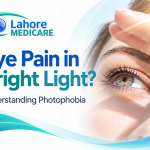
Feeling a sharp, aching, or uncomfortable sensation when exposed to bright sunlight, digital screens, or sudden headlights is a common complaint. Known medically as photophobia, light sensitivity is not a standalone disease, but rather a symptom indicating that the optical or neurological structures of your eye are irritated, inflamed, or hyper-reactive to light stimulation.
Understanding the mechanics behind photophobia helps distinguish between temporary light discomfort and underlying ocular or systemic health conditions that require clinical evaluation.
The Neurological and Anatomical Mechanics of Photophobia
Under normal conditions, when light hits the eye, the iris contracts its sphincter muscles to shrink the pupil, limiting the amount of light reaching the retina. When you experience pain in response to bright light, several physiological mechanisms are typically triggered:
- Trigeminal Nerve Pathway Activation: Pain signals from the front of the eye (cornea, iris, and ciliary body) are carried along the ophthalmic branch of the trigeminal nerve (V1). When ocular tissues are inflamed, standard light levels cause hypersensitive trigeminal nerve endings to fire pain signals directly to the brain.
- Ciliary Muscle Spasm (Photomotor Reflex): When bright light forces a sudden contraction of an inflamed iris or ciliary body, the rapid muscle constriction causes a deep, throbbing muscular ache inside the eyeball.
- Intrinsically Photosensitive Retinal Ganglion Cells (ipRGCs): Specialized light-sensing nerve cells in the retina project signals directly to pain-processing centers in the brain stem. These pathways explain why even individuals with damaged rods and cones can experience severe light-induced pain.
Common Ocular Causes of Light-Induced Pain
Light sensitivity accompanied by discomfort generally stems from issues affecting the front optical structures or internal vascular tissues of the eye:
1. Corneal Surface Damage and Dry Eye Syndrome
The cornea contains the highest concentration of sensory nerve endings in the human body. When the tear film breaks down—or when the corneal surface develops microscopic scratches (corneal abrasions), keratitis, or contact lens irritation—exposed nerve endings react intensely to incoming light, triggering sharp pain, tearing, and reflex blinking.
2. Intraocular Inflammation (Anterior Uveitis / Iritis)
Anterior uveitis is an inflammation of the iris and ciliary body. Because bright light forces the inflamed iris to constrict, patients experience a deep, aching ocular pain whenever light enters either eye (known as true photophobia or consensual photophobia).
3. Migraines and Neurological Sensitivity
Migraines are one of the most frequent neurological causes of photophobia. During a migraine episode, altered processing in the brain’s visual cortex heightens sensitivity to light, causing even baseline ambient indoor lighting to feel uncomfortable or painful.
4. Infections and Allergies
Conditions such as conjunctivitis (pink eye), viral corneal infections (herpes simplex keratitis), or severe seasonal allergic conjunctivitis cause localized surface inflammation that amplifies light sensitivity.
Systemic and Environmental Triggers
Beyond direct ocular conditions, several environmental and general health factors can heighten sensitivity to light:
- Pharmacological Eye Drops: Diagnostic dilating drops (mydriatics) artificially paralyze the pupil sphincter, holding the pupil open and allowing an excessive volume of light to flood the retina.
- Post-Surgical Sensitivity: Following refractive procedures (such as LASIK or PRK) or cataract surgery, temporary surface dryness and corneal nerve regeneration increase light sensitivity during early healing phases.
- Screen Fatigue and Glare: Prolonged digital screen use reduces natural blink rates, exacerbating tear evaporation and causing computer vision syndrome-related photophobia.
Experiencing persistent or sudden-onset light pain warrants a thorough diagnostic evaluation at an established medical facility like Lahore Medicare to identify the root trigger.
Managing Light Sensitivity and Relief Strategies
Addressing photophobia effectively requires treating the underlying root cause rather than relying exclusively on dark surroundings:
- Prescription Lubricating Drops: Restoring the natural tear film soothes exposed corneal nerves and reduces glare sensitivity caused by dry spots.
- Polarized and Tinted Lenses: Outdoor sunglasses with 100% UVA/UVB protection prevent excess light stimulation. Indoors, FL-41 tinted lenses selectively filter out blue-green light wavelengths that trigger trigeminal pain pathways.
- Targeted Anti-Inflammatory Therapy: If intraocular swelling is present, prescription anti-inflammatory or corticosteroid eye drops resolve tissue inflammation and relieve ciliary muscle spasms.
Patients suffering from chronic eye pain linked to inflammatory conditions or surface disorders can rely on specialized care for complex eye diseases and conditions to stabilize intraocular health. For cases requiring diagnostic mapping or specialized therapeutic monitoring, accessing advanced ophthalmic procedures ensures targeted recovery and long-term visual comfort.
Frequently Asked Questions
Why does bright light make my eyes ache deeply?
Deep aching pain in bright light is often caused by ciliary muscle spasms or irritation of the iris (iritis/uveitis). When bright light enters the eye, the inflamed pupil constricts rapidly, causing muscle pain along the trigeminal nerve pathway.
Is photophobia a sign of a serious eye problem?
While photophobia can be caused by minor issues like mild dry eyes or fatigue, sudden or severe light sensitivity can indicate serious conditions like anterior uveitis, corneal ulcers, elevated eye pressure, or retinal inflammation.
What is the difference between photophobia and normal light glare?
Normal glare causes temporary visual discomfort or squinting in intense light. Photophobia involves actual physical pain, burning, excessive tearing, or an inability to keep the eyes open even in moderate light.
Can dry eye syndrome cause eye pain in bright light?
Yes. Dry eye syndrome causes micro-breakdowns on the surface of the cornea. Without a smooth tear film to protect surface nerves, light rays scatter across the cornea, triggering pain and photophobia.
Why do migraines cause light sensitivity?
Migraines increase the sensitivity of neurological pathways connecting the retina to the brain’s visual cortex. This hyper-reactivity causes standard room lighting to trigger or intensify headache pain.
Should I wear sunglasses indoors if light hurts my eyes?
Wearing dark sunglasses indoors for extended periods is generally discouraged because it can dark-adapt your retinas, making your eyes even more sensitive to light over time. Instead, address the underlying cause or use specialized FL-41 tinted precision filters.
Can eye infections cause light sensitivity?
Yes. Viral, bacterial, or fungal infections affecting the cornea (keratitis) or conjunctiva cause localized inflammation and nerve hypersensitivity, making light exposure painful.
How do doctors test for the cause of light sensitivity?
Ophthalmologists use a slit-lamp microscope to inspect the corneal surface, check for floating inflammatory cells in the anterior chamber, measure intraocular pressure, and examine the retina.